







Image. by Noah Wulf
Pentagon, Washington, DC - The U.S. Air Force has reversed course on retiring its iconic A-10 Thunderbolt II, commonly known as the Warthog, announcing that the close air support aircraft will remain in service through at least 2030.
Secretary of the Air Force Troy E. Meink made the announcement Monday on X, stating the extension was made in consultation with Defense Secretary Pete Hegseth.
“In consultation with [Defense Secretary Pete Hegseth], we will EXTEND the A-10 ‘Warthog’ platform to 2030,” Meink wrote. “This preserves combat power as the Defense Industrial Base works to increase combat aircraft production.”
The decision comes as the A-10 fleet has seen renewed and intensified use during Operation Epic Fury, the U.S. military campaign against Iran. The rugged, low-and-slow attack jets have provided critical close air support, including strikes on Iranian fast boats in the Strait of Hormuz and participation in a high-risk search-and-rescue mission that recovered two downed F-15E Strike Eagle airmen earlier this month. One A-10 was lost during that operation, though the pilot was safely rescued, reported Military Times.
The A-10 Thunderbolt II, famous for its GAU-8/A 30mm Gatling gun and titanium armor "bathtub" protecting the pilot, has long been a favorite of ground troops for its ability to deliver devastating firepower in close proximity to friendly forces. The Air Force has repeatedly sought to retire the aging platform in favor of more modern multirole fighters, citing survivability concerns in high-threat environments.
Prior plans, influenced by the fiscal 2026 National Defense Authorization Act (NDAA), had called for keeping 103 A-10s in service through September 2026 before a full drawdown leading to retirement by 2029. It is not yet clear exactly how many of the roughly 160 remaining A-10s will continue flying through the end of the decade.
Meink credited President Donald Trump for “quick, decisive leadership” in supporting the move and hinted that additional announcements regarding Air Force capabilities could be forthcoming.
The extension provides breathing room while the defense industry ramps up production of newer combat aircraft to eventually replace the Warthog in the close air support role. Despite its age—the A-10 first entered service in the 1970s—the platform continues to prove its value in real-world contingencies, particularly in lower-intensity or maritime support missions where its endurance, loiter time, and heavy armament remain unmatched.
Aviation analysts note that repeated congressional interventions have kept the A-10 alive in the past, and its performance in the current Middle East operations appears to have influenced the Pentagon’s latest decision to delay retirement once again.
In today's budget briefing for the Pentagon Press, officials stated that approximately 19 A-10 aircraft will be kept in service one more year, likely to support possible CSAR operations. AFP attended the briefing.
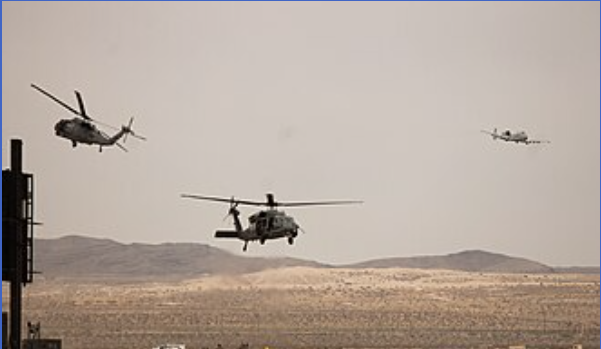
The 'Sandy' attack aircraft role in combat rescue, to protect slow-flying rotary-wing aircraft is especially suited to the A-10 platform.