







Originally posted at Real Clear Defense
A service member can fight in Baghdad, return home to lose a house in a hurricane, and patrol the wreckage of his own neighborhood — and still be told trauma belongs only to combat.
The 256th Infantry Brigade Combat Team deployed to Iraq in 2004, conducting combat operations in and around Baghdad. Within months of returning home, Louisiana was struck by Hurricane Katrina. Guard members mobilized again — this time to stabilize shattered communities inside their own state. Some lost homes. Some lost neighborhoods. Units patrolled streets they had once driven to work.
The theater shifted. The psychological load did not. As U.S. forces again operate in sustained high-threat environments during the ongoing conflict with Iran—facing missile attacks, drone strikes, and persistent exposure to lethal risk without traditional ground combat—the gap between how trauma is experienced and how it is defined continues to widen.
For two decades, the American military has treated post-traumatic stress disorder as synonymous with battlefield exposure. Combat trauma is real and demands continued seriousness. But the modern force operates in an environment where exposure to overwhelming stress, loss, and moral strain extends well beyond enemy contact. As the Department of War continues to invest in suicide prevention amid delayed annual reporting, this is an appropriate moment to reassess how trauma is defined within the force.
According to the Department of Defense Annual Report on Suicide in the Military, 492 total service members died by suicide in Calendar Year 2022 and 523 in 2023. Active Component deaths were 331 in 2022 and 363 in 2023. Many of those who die by suicide have no combat deployment history. Deployment status alone does not predict suicide risk. Relationship strain, workplace stress, legal problems, and untreated mental health concerns consistently appear among the most common stressors in DoD Suicide Event Reports.
If trauma were exclusively a battlefield phenomenon, those numbers would look very different.
Unmeasured stress is unmitigated risk.
The prevailing framework often treats trauma as binary — either a service member deployed to combat or did not, but psychological risk rarely operates in binary form. Much of this exposure occurs not as a single catastrophic event, but as chronic stress—repeated, unresolved strain that accumulates across time. This pattern aligns with what behavioral health research describes as cumulative trauma or allostatic load—the physiological and psychological wear that builds when stress is repeated without adequate recovery.
A training fatality layered onto disaster response, compounded by personal loss or ethical strain, creates a cumulative risk profile that deployment status alone cannot capture. Over time, stacked exposures lower resilience thresholds and increase vulnerability to clinical symptoms.
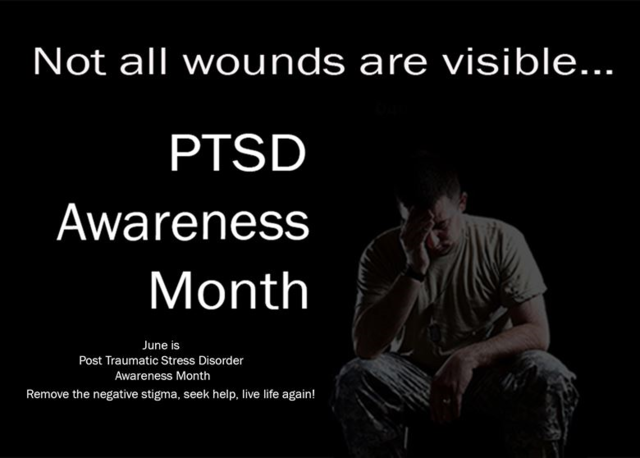
PTSD is not defined by geography but by exposure to actual or threatened death, serious injury, or repeated proximity to trauma — whether in combat or not. Recognizing that reality does not diminish combat veterans; it sharpens institutional understanding.
The Broader Spectrum of Military Trauma
Training and Institutional Stress Exposure
Non-combat training accidents remain a persistent source of military fatalities. In 2017 alone, the military recorded roughly 80 non-combat training-related deaths, many tied to vehicle incidents, aviation mishaps, and operational accidents. Between 2010 and 2019, tactical vehicle incidents alone resulted in more than 120 service member deaths.
When a soldier loses a peer during a stateside range accident, the nervous system does not distinguish between “training” and “combat.” The stress response activates automatically, imprinting the experience regardless of mission designation. Shock and grief follow exposure — not mission label.
The military also deliberately induces extreme stress in preparation for war. Programs such as Survival, Evasion, Resistance, and Escape (SERE) training simulate captivity, interrogation pressure, isolation, sleep deprivation, and loss of control. Stress inoculation reflects an institutional understanding that the body encodes stress. Research across high-stress professions indicates that repeated high-intensity exposure without adequate recovery cycles correlates with increased burnout and psychological strain. Preparation builds resilience. Persistent strain without recovery erodes it.
Disaster and Domestic Operations
Combat deployments are not the only missions that expose service members to traumatic environments.
After Hurricane Katrina, nearly one in five workers in the New Orleans area met criteria for PTSD symptoms. Follow-up studies more than a decade later documented clinically significant symptoms persisting in affected populations.
National Guard units responding to such events operate within the same landscape of devastation. Domestic missions rarely trigger the structured decompression processes associated with overseas deployments. Yet exposure to body recovery, infrastructure collapse, wildfire response, flood recovery, and prolonged community suffering carries measurable psychological weight.
Guard and Reserve members move between civilian life and emergency response roles with little buffer. The oscillation between identities compounds stress in ways deployment-centric models do not fully capture.
Repeated Exposure to Death and Human Crisis
The diagnostic framework for PTSD includes repeated or extreme exposure to adverse details of traumatic events. That language extends well beyond infantry combat.
Consider Coast Guard search-and-rescue crews operating beneath the Golden Gate Bridge. Year after year, they respond to suicide calls and recover bodies from cold water. There is no enemy involved. But repeated proximity to death imprints over time.
Across the services, naval aviation mishaps, Air Force aircraft crashes, submarine isolation cycles, maritime recovery missions, and cyber operators reviewing combat footage expose personnel across every branch to intense stress outside traditional combat arms roles. Medics, chaplains, casualty notification officers, and investigators frequently operate in close proximity to tragedy.
These exposures accumulate across careers.
Familial and Personal Loss
Military service amplifies personal strain.
Extended separations, unpredictable activation cycles, and financial instability contribute to marital stress. Relationship conflict remains one of the most frequently identified stressors in suicide investigations.
Some losses are deeply personal — the death of a child, a miscarriage during deployment, a newborn in intensive care while a parent remains on orders. These events fracture identity and emotional stability. Service obligations rarely pause when life fractures.
Separation itself becomes a form of sustained psychological strain. Repeated absences during critical life events—births, illnesses, deaths, and periods of instability—erode relational bonds and create a persistent sense of disconnection that compounds over time. For Guard and Reserve members in particular, the rapid transition between civilian family roles and operational demands can intensify that strain, leaving little opportunity for recovery or reintegration.
In many cases, families experience what psychologists describe as ambiguous loss—where a service member is physically absent or psychologically unavailable, creating unresolved strain without clear closure.
Layer operational demands onto unresolved grief, and psychological burden compounds.
Moral Injury and Institutional Rupture
Not all trauma is kinetic.
Research within veteran populations has identified moral injury — distress arising from perceived ethical violation, institutional betrayal, or leadership breakdown — as strongly associated with depression and suicide ideation, even when controlling for traditional PTSD symptom severity. VA studies have found moral injury to correlate with increased suicide ideation independent of PTSD severity.
Psychological harm can stem not only from what happened in combat, but from what service members believe should not have happened — or from institutional responses that violate deeply held values. Prolonged administrative investigations, legal uncertainty, or perceived violations of due process can intensify that rupture. When service members experience extended uncertainty about their status, career, or reputation, the psychological strain can rival operational stress.
This dimension rarely appears in deployment-based screening frameworks. Yet its association with suicide ideation suggests it warrants institutional attention.
The Institutional Blind Spot
Military trauma policy remains heavily deployment-centric, even as operational exposure has diversified. Post-deployment health assessments are standardized. Domestic mission decompression is inconsistent. Career incentives still favor stoicism over disclosure. Recent operations in the Middle East further illustrate this disconnect. Service members operating in the current conflict with Iran face repeated exposure to missile threats, indirect fire, and remote strike environments—conditions that generate sustained psychological stress without fitting traditional definitions of combat exposure.
The Department of War invests hundreds of thousands — often over a million dollars — training specialized operators, pilots, intelligence professionals, and senior noncommissioned officers. Losing mid-career personnel to preventable psychological collapse is not only a human tragedy; it is a strategic loss of institutional capital. Retention is readiness. Replacing a pilot or senior NCO is not merely a budget line item; it represents years of lost experience and a capability gap that cannot be rapidly regenerated.
Guard and Reserve members transition repeatedly between civilian and military environments without consistent recalibration points.
What we measure drives what we mitigate.
When trauma frameworks emphasize combat exposure as the primary indicator of risk, compounded stress outside warfighting theaters can be underestimated or overlooked.
Critics may argue that broadening trauma definitions risks diluting resources for combat veterans or expanding disability claims. Any expansion of trauma recognition must be paired with clear guardrails—evidence-based screening tools, defined clinical thresholds, and integration with existing assessment systems—to prevent over-diagnosis while ensuring that accumulated risk is not ignored. But earlier identification of accumulated stressors strengthens readiness and reduces long-term cost. Suicide, medical separation, and premature attrition carry enormous financial and operational consequences.
What Must Change
- Expand trauma screening beyond deployment-triggered models. Screening frameworks should account for career-long exposure patterns, including training accidents, domestic operations, repeated occupational proximity to death, and documented moral injury.
- Integrate cumulative exposure tracking into readiness systems. Incorporate relevant stress indicators into annual readiness reviews, post-mission assessments, and electronic medical records, and improve interoperability between DoD and VA systems to capture non-deployment-related stressors across the service lifecycle.
- Modernize professional military education. Integrate multidimensional trauma recognition and moral injury modules into NCO academies and command courses.
- Strengthen Guard and Reserve-specific support structures. Develop mental health frameworks that account for the oscillation between civilian and military environments.
Broadening recognition of trauma does not diminish combat veterans. It reflects operational reality.
Recognizing non-combat trauma is not dilution. It is calibration.
Conclusion
Service carries risk beyond the battlefield.
Training accidents. Disaster response. Suicide recovery. Familial loss. Institutional rupture. Controlled stress in preparation for war. Accumulated over years, these exposures shape the force in ways doctrine has been slow to acknowledge.
Until we broaden how we understand PTSD in the modern force, we will continue to misread readiness — and continue to lose capable service members to invisible attrition. As the United States re-enters sustained conflict in the Middle East, the next generation of invisible wounds is already forming—many of them outside the boundaries our current definitions are designed to detect.