







Military Mythology, Selective Remembrance, and the Sacrifices America Forgets
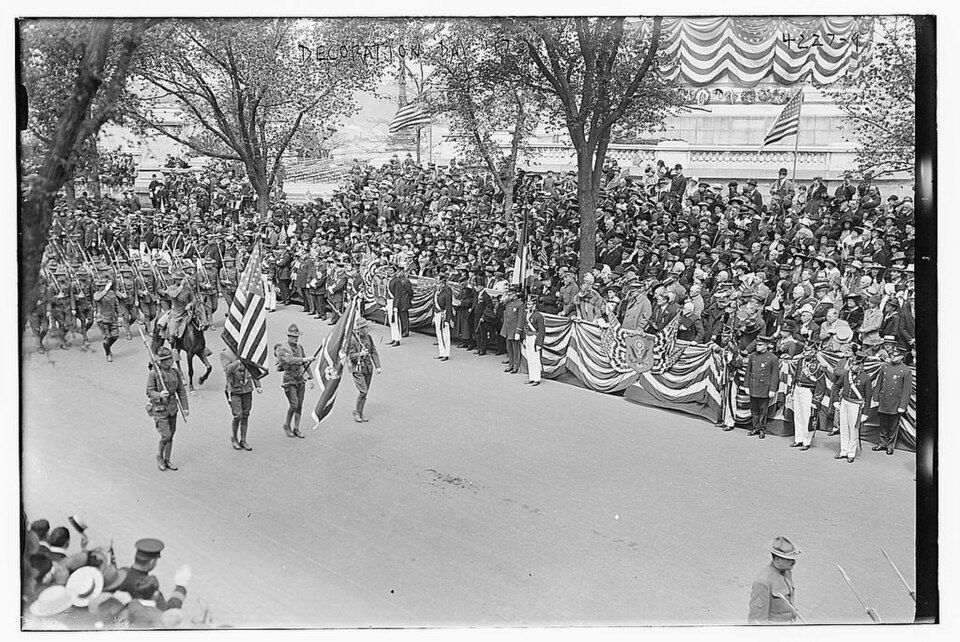
Public Domain
Every Memorial Day weekend, gyms across America fill with flags, sweat, and tribute workouts. People gather before dawn wearing weighted vests while patriotic music echoes across parking lots and pull-up rigs draped in oversized American flags. Hero WODs begin. Names of fallen service members are read aloud. Photos get posted online beside captions about sacrifice, resilience, and honoring the fallen.
And I believe most of them mean well.
That matters because I am not writing this as someone mocking CrossFit culture or criticizing remembrance from the outside. I am a CrossFitter. I understand why Hero WODs exist. I understand why people voluntarily seek difficult things and why these workouts have become meaningful to so many people.
But I have never worn the vest.
Not once.
Something about it always felt wrong to me.
I have watched Murphs where incredibly fit athletes, young and uninjured, ran with their bodies draped in flags and weighted vests meant to evoke body armor. One year I even saw someone wearing an old unit patch from a friend’s unit. What stayed with me was not anger so much as distance.
I spent time recruiting at pop culture conventions where people walked around in ghillie suits carrying replica weapons, dressed in versions of military identity they clearly found exciting or meaningful. But when I tried to talk to some of them about actual service, many were not interested in the conversation.
I do not say that judgmentally. Military service is not for everyone, and nobody owes the country a uniform.
But moments like that stayed with me because they highlighted the strange gap between military aesthetics and military reality. America often seems deeply attached to the image of service while remaining uncomfortable with the burden of it.
I remember enough of being hot, miserable, and still proud to belong to something bigger than myself to know the difference matters. Maybe part of what unsettles me is simpler than I want to admit.
Still, every Memorial Day, part of me feels disconnected from the spectacle of it all.
Not the workouts themselves.
Not fitness.
Not remembrance.
The performance of it.
The giant flags hanging from rigs. The staged hardship. The social media captions about “embracing the suck.” The military aesthetic wrapped around symbolic hardship.
And maybe what bothers me most is not that sacrifice gets remembered, but that only certain kinds of sacrifice become mythology.
America Prefers Legends
America loves military mythology.
We gravitate toward elite units, impossible missions, and cinematic heroism because those stories are easier to understand than the complicated reality of military service. SEAL teams become movies. Delta operators become books and podcasts. Certain names become symbols permanently attached to patriotism, toughness, and sacrifice.
Those men earned respect. This is not an attempt to diminish extraordinary acts of courage or combat service.
But somewhere along the way, we quietly started treating certain forms of sacrifice as more meaningful than others.
Not every dead service member was a SEAL.
Not every one of them kicked down doors in Fallujah or raided compounds under night vision.
Some were mechanics.
Some drove fuel trucks.
Some ran convoy security on endless Iraqi roads where every overpass and pile of trash carried the possibility of death.
Some could not overcome the struggles of deployment and family separation.
Some were National Guardsmen pulled away from ordinary civilian lives and dropped into wars most Americans stopped paying attention to years ago.
Some faced cancer after exposure to burn pits and other toxic chemicals in postwar Iraq.
Some died in rollovers during training and in-country.
Some were crushed during exercises.
Some were gravely wounded at JRTC in events that will never become movies or annual tribute workouts.
Some survived combat only to lose the war years later in silence back home.
The dead I remember most rarely looked cinematic.
They looked ordinary. Forever young.
The Weight We Do Not Count
America often measures the Global War on Terror through battlefield deaths alone, as if the war existed only inside Iraq and Afghanistan and only during firefights.
Roughly 7,000 American service members were killed across post-9/11 combat operations, including approximately 4,500 in Iraq and 2,400 in Afghanistan. More than 53,000 were officially wounded in action.
Even those numbers fail to capture the true scale of what the last twenty years cost.
Because the war did not stay overseas.
Estimates of post-9/11 suicide deaths among veterans and active-duty service members vary widely depending on methodology, but even conservative assessments point to thousands more deaths by suicide than in combat. The war’s toll expands far beyond battlefield casualties into a generation of people who carried something home that never fully left them.
And even those numbers remain incomplete.
They do not fully account for traumatic brain injuries, toxic exposure, addiction, broken families, homelessness, psychological collapse, or the thousands of veterans quietly unraveling in ways that never become statistics anyone publicly remembers.
Nor do they account for the dead and wounded outside direct combat.
The convoy driver killed escorting supplies across Iraq.
The Guardsman killed in a market by a suicide bomber.
The soldier killed in a rollover stateside.
The service member who survived deployment only to lose the war years later at home.
America remembers dramatic sacrifice while overlooking cumulative destruction.
We build mythology around kinetic moments because they are easier to process than the quieter reality that many people were not destroyed instantly by war. Many were worn down slowly until something finally broke.
The Military Most People Never See
Military service rarely feels like the version civilians imagine. Most of it is not cinematic heroism but boredom, heat, nicotine, maintenance problems, sleep deprivation, dark humor, bad coffee, energy drinks, pointless details, long convoy briefs, waiting, paperwork, frustration, and trying to get through the day without somebody getting hurt.
Most service members are not trying to become legends. They are trying to get through another day. That reality becomes uncomfortable in a culture increasingly built around military aesthetics, where military identity became branding, patriotism became performance, and hardship became something people could display.
But there is still something unsettling about symbolic hardship replacing actual understanding.
Because real military burden does not come off after an hour-long workout.
Veterans Create Mythology Too
Veterans are not innocent in this either.
We perpetuate the mythology ourselves.
We rank wars.
We rank deployments.
We rank suffering.
“In OIF 1 we fought a real war.”
Okay.
And what do you think Vietnam veterans thought listening to us say that?
Every generation romanticizes its own hardship while minimizing somebody else’s. Combat arms dismisses support units. Active duty dismisses the Guard. Special Operations culture overshadows conventional forces. GWOT veterans sometimes cheapen peacetime service while forgetting that previous generations once questioned the legitimacy of our own wars too.
We quietly create hierarchies of sacrifice, treating some losses as sacred and others as forgettable.
War and military service are full of randomness. Vehicle rollovers. Training accidents. Maintenance failures. Exhaustion. Psychological collapse. A bad road at the wrong time.
But America prefers legends because legends are easier to live with than ordinary grief.
The Weight Some People Never Put Down
Part of my discomfort may also come from something more personal.
Military service changes your identity whether you want it to or not. The language, humor, stress, structure, friendships, deployments, and losses reshape how you see the world. Then one day the uniform is gone, but the memories remain.
Afterward, you watch military culture continue without you, transformed into politics, branding, entertainment, or social identity. That is a strange thing to experience, especially when some of the people you remember most are gone entirely.
Maybe that is why I recoil from parts of performative military culture: symbolic suffering celebrated while people who carried very real burdens often did so without recognition, without mythology, and sometimes without support.
The people I remember most were not action movie characters.
They were ordinary Americans carrying extraordinary weight.
Some carried it well.
Some carried it quietly.
Some carried it until it crushed them.
Maybe I am wrong.
Maybe the people doing these workouts are honoring the dead better than a country that usually forgets them by Tuesday. Maybe they are sincerely trying to connect themselves to sacrifice in a society increasingly disconnected from military service altogether.
I hope that is true.
But if you are going to do Murph on Memorial Day, then it is worth asking a little more of yourself than whether you finished it in a vest.
Do you know who Lt. Michael Murphy was? Do you know why his name became a workout? Do you know what, exactly, you are claiming to honor when you post the photo afterward?
And if you do know, then remember this too: his sacrifice was not the only kind that mattered. Remember the mechanic. The convoy driver. The Guardsman killed in a market by a suicide bomber. The service member killed in training. The veteran who survived deployment only to lose the war years later at home. Remember the people whose sacrifice never became a brand, a ritual, a slogan, or a legend. Because remembrance should be more than performance. It should be knowledge. It should be humility. It should be honest enough to admit that this country did not lose only the men whose deaths fit neatly into mythology. It also lost the tired, ordinary Americans who carried extraordinary weight without recognition, without ceremony, and sometimes without help until it crushed them. That is the weight I think about every Memorial Day.