







Originally published at Mises Institute.
Today is Veterans Day. It’s a day when politicians like to give speeches praising the extraordinary courage and selflessness of America’s veterans and active-duty military personnel.
It’s also a day when American military history is often treated like a vague, homogeneous blob of sacrifice. But it’s worth getting a bit more specific.
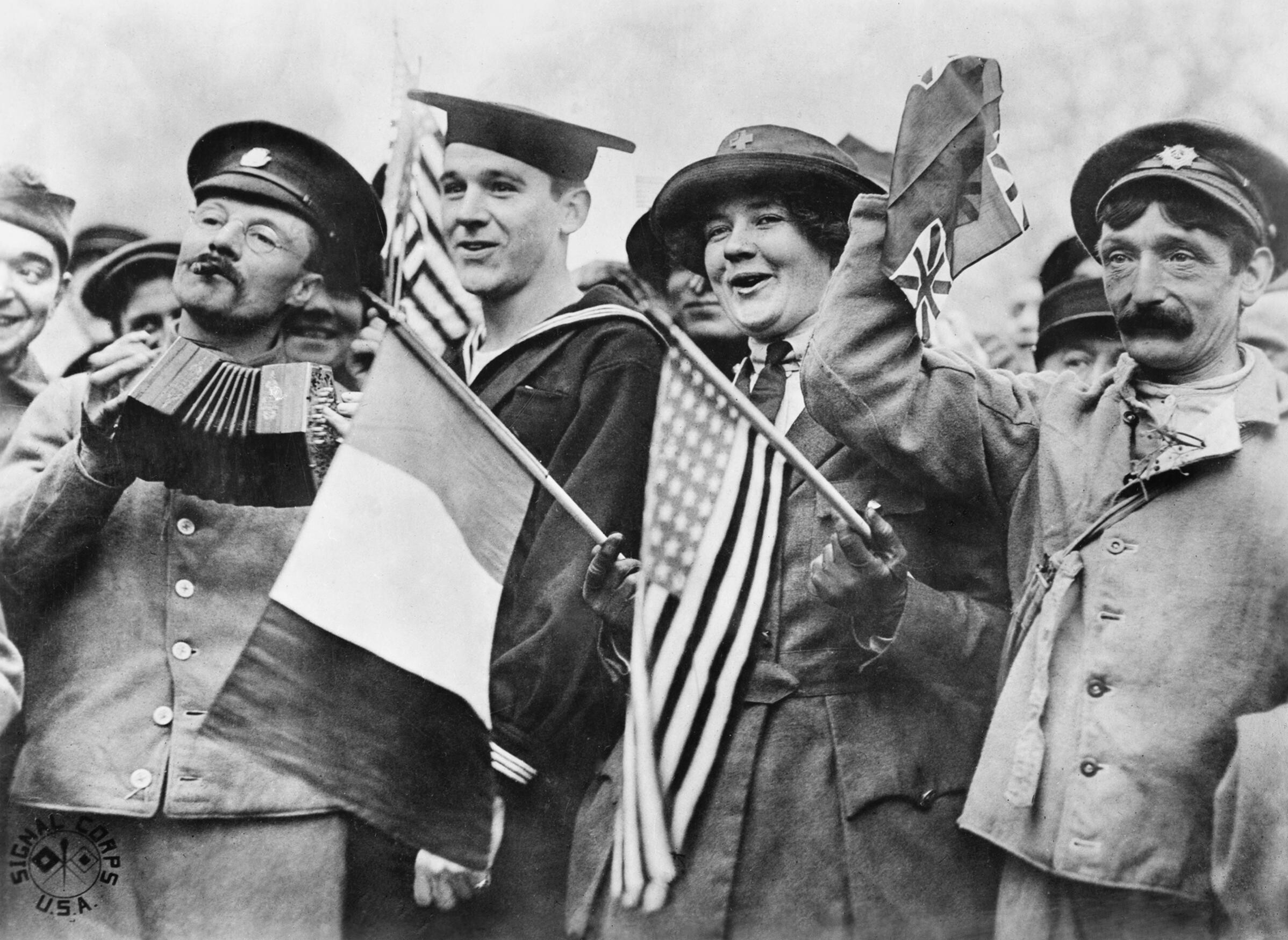
We celebrate on November 11 because that’s the day, back in 1918, when World War I ended. It was famously the day when the guns fell silent at the eleventh hour on the eleventh day of the eleventh month.
Less famous is the fact that the agreement to stop fighting had been reached around 5 am that day. But the Allied high command rejected their German counterparts’ request that everyone stop firing as quickly as orders could be circulated, opting instead to wait until the more poetic time of 11 am. And, in those last few hours, 2,738 soldiers would lose their lives—including an American private who was shot and killed at 10:59 am, seconds before both sides were officially ordered to cease firing.
However, the tragedy of those last few hours of unnecessary fighting was immediately overtaken by an overwhelming sense of relief. The world had never seen death and destruction at a scale even close to what had just consumed Europe. The military and civilian deaths are estimated to fall somewhere in the range of 15 to 22 million.
As we know now, the war was, unfortunately, only the opening phase of a three-decade-long catastrophe that saw Europe collapse into revolutionary violence, regions like the Middle East torn into territorial disputes that are still ongoing, and the world descend into a second, even larger global war. This period was so destructive and cost humanity so much that now, almost a century later, we’re still struggling to fully understand it.
But no one knew that all of that lay ahead 108 years ago today, when the fighting stopped. Still, the day was less a rowdy celebration and more, again, grounded in a sense of relief that the horror in the trenches and the suffering everywhere else the war touched were finally over.
And a year later, when President Wilson proclaimed the anniversary as an American holiday—then called Armistice Day—the day still carried a somber sense of remembrance for those who had died, reflection on the horrors they had gone through, and, above all, urgency for making sure that nothing like it ever happened again.
However, not everyone shared that sense of relief or the weary desire to move fully on from the war. Because several groups had benefited enormously from the institutional changes brought about by the wartime political order.
As Murray Rothbard laid out in his short book War Collectivism (which we’re giving away free hard copies of this month), World War I greatly accelerated a trend that had begun in isolated corners of the economy in the preceding decades—known as the Progressive Era. The war helped establish a powerful and durable alliance between the federal government, big business interests, and a class of “progressive” intellectuals who saw the centrally-planned mobilization of resources as an opportunity to move toward their ideal society, one managed by “experts” like them.
Some members of this alliance, such as Rexford Tugwell, explicitly complained that the Armistice had prevented “a great experiment” in government control over production and all parts of society. But the more serious parts of this big business-government-intellectual coalition got to work finding other emergencies to justify not only continuing that kind of wartime federal control, but accelerating it.
That came first in the 1920s with Herbert Hoover’s “associationism,” which set the stage for the corporate statism of FDR’s New Deal in the 1930s. Then World War II, of course, saw an even larger centralization of power in this burgeoning bureaucratic administrative welfare-warfare state. By the time the war ended, the alliance that had initially formed as a “temporary” wartime measure during World War I had fully developed into an identifiable and, importantly, self-interested caste within the American political system.
And that caste has pursued its own interest relentlessly in the decades since. That was somewhat straightforward early on since the Cold War with the Soviet Union seemed to justify all the money, resources, and jobs the federal “national security” apparatus was eating up. But especially since the USSR collapsed in the early 1990s, the bureaucrats, politicians, weapons manufacturers, and related lobbies have had to work hard to find or create enemies and wage perpetual wars to justify all the wealth and power they’re awarding themselves, at our expense, every single year.
And Veterans Day has played a part in that effort. In the 1950s, President Eisenhower officially changed Armistice Day to Veterans Day. That was done ostensibly, and somewhat understandably, to include veterans of WWII and Korea in the ceremonies.
But with that shift, the holiday’s center of gravity moved from celebrating the end of a particular war to honoring veterans of all wars. And over time, after each major war, the holiday’s meaning widened from the initial grateful recognition that a war was over to something of a spotlight for politicians to stress that military service is itself glorious, which has made each next war easier to sell.
And make no mistake, that is precisely what the hawkish politicians and establishment voices we hear today are doing. They are selling unnecessary wars that benefit themselves and their well-connected friends to the population and fighting force that must bear the cost.
And what makes this especially infuriating is what they’re exploiting.
There are few human qualities more admirable than the willingness to risk or even sacrifice one’s own life to protect others. The instinct that drives someone to put himself in harm’s way to defend his family, neighbors, and community is genuinely noble. To be sure, that is not why everyone in the American military has joined up. There are plenty of different reasons soldiers from all different backgrounds have out there, from family history to economic necessity.
But it is still clear, if you take even a passing glance at history, that a willingness to sacrifice one’s time, comfort, physical safety, and even life to protect one’s community is something that Americans have had in abundance.
The way that willingness to sacrifice has been hijacked by this ever-growing caste of “national security” bureaucrats, hawkish politicians, and weapons companies to wage wars of choice on behalf of their well-connected friends and favorite foreign lobbies is utterly despicable.
Those who died in the final hours of World War I did not need politicians to praise their sacrifice. They needed the men giving the orders and the politicians directing them to stop unnecessarily demanding it.
More than a century later, that is still what we need. And it is the best way to truly honor America’s veterans and active-duty soldiers: stop squandering their lives in wars that never needed to be fought.
Note: The views expressed on Mises.org are not necessarily those of the Mises Institute.