







...the pre-war wargames said it was hopeless, but you lead your men forward anyway...

First things first; don't let the fact this was 43 years ago fool you. Even though it is as far away from today as the events below were to the start of WWII in Europe, from a technology standpoint, the fundamentals are the same and the challenge is great.
There are two big takeaways from this story that still require our attention today.
From the outstanding Sea of Fire that you will find at the bottom of the post, this story should be seen by anyone who goes to sea. I want you to focus on two things though. Two things, IMAO, that get fairy-dusted, happy-talked, best-cased, and downright ignored when it comes to war at sea.
First big takeaway is the well known and proven need for redundancy and defense in depth in AAW.
Things in this area have improved since 1982, at least for the US Navy. We’ve see great success in the Red Sea in the last few years. The hard lessons of the Royal Navy in the Falklands had a lot to do with that.
However, the accountants and those who craft budget-focused vignettes are still playing a dangerous game. Missiles and multi-purpose main guns can not do it alone. CIWS, Goalkeeper, SeaRAM etc are great - but good googly moogly it doesn't take long to go Winchester, and you are always one CASREP away from having your pants down without redundancy, as HMS BROADSWORD experienced.
Do not downplay "off-line" crew-served weapons. If you have an eyeball and a finger, they work. More talk in a small boat scenario post-9/11 has plus'd-up topside with mounts from 30mm to 7.62 - but are they enough? Bet that they’re not.
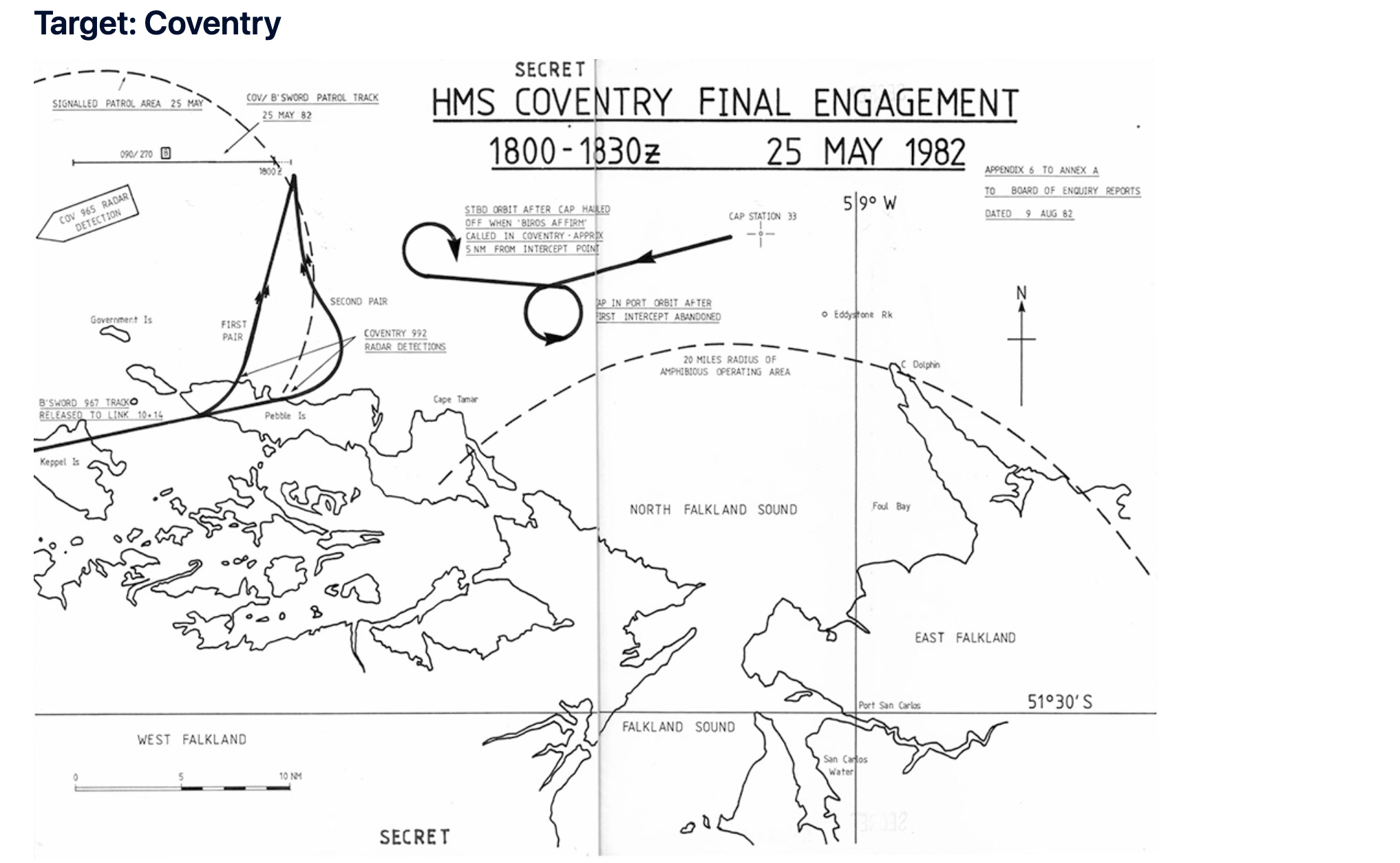
When you are close in and the enemy is numerous, motivated, and many -- you will do what you have to do to make up for the bean counter shortfalls. You will line the decks with every weapon on the ship in the drive to keep your ship afloat. You’ll see that during this engagement.
When it comes to guns once war starts: see what you have and double it—then add more—that is what you need.
Second big takeaway from this engagement is damage control. Read the board of inquiry report.
I offer you Captain David Hart-Dyke and the crew of the HMS COVENTRY. Get a cup of coffee and watch it all. I'll let them take it from here.