







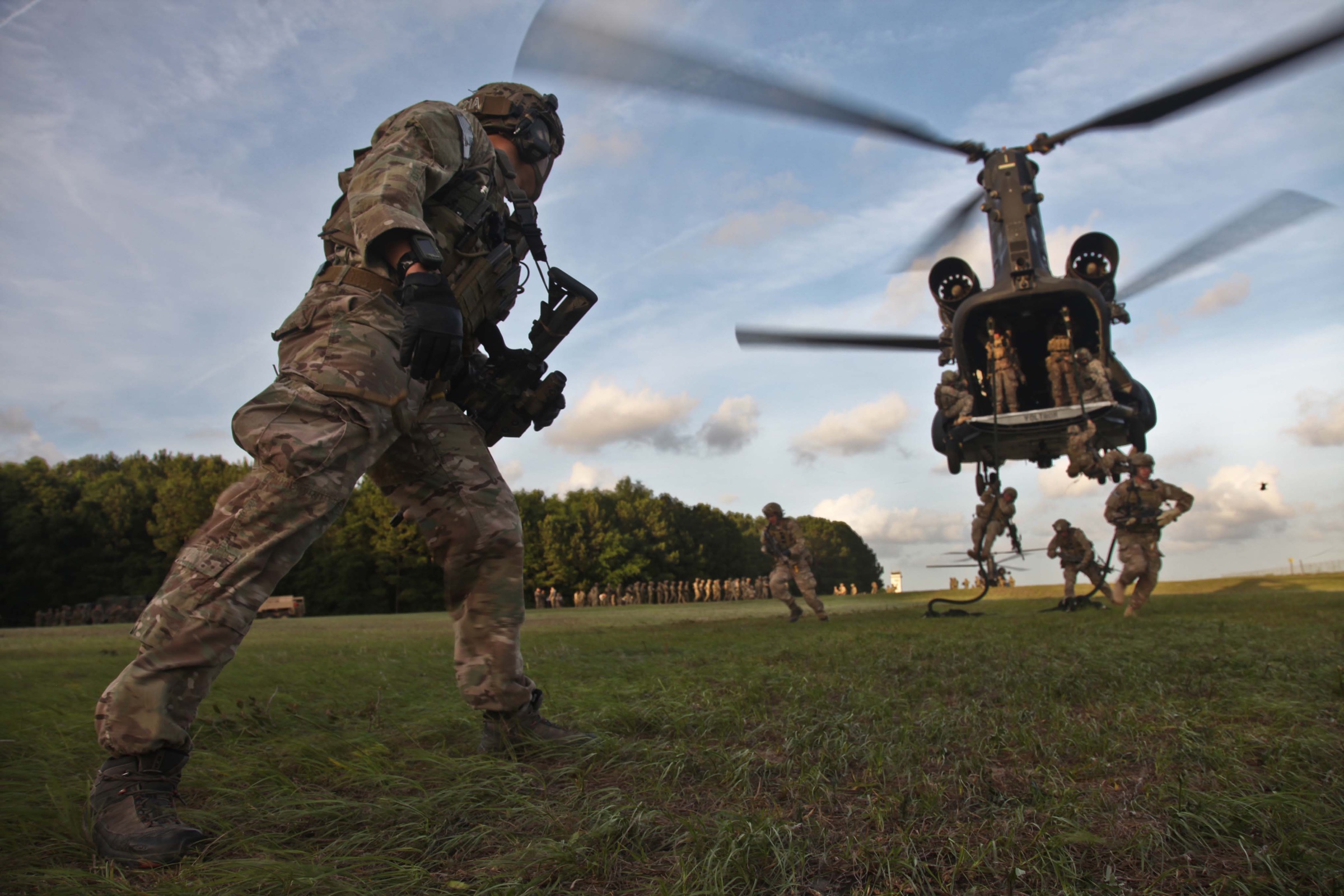
Secretary of War Pete Hegseth has directed the elevation of the Assistant Secretary of War for Special Operations and Low-Intensity Conflict to the same level as the service secretaries, and he is restoring the name of the World War II precursor to the present day special operations forces, the Office of Strategic Services.
This document was published by the Department of War on November 12, 2026. It is dated November 2, 2026 and numbered as OSD011630-26/CMD014882-26.
The memo directs a legislative proposal to change the title of the Secretariat for Special Operations to the Office of Strategic Services. The same proposal would create an Under Secretary of Strategic Services as a new position in the Department of War which shall succeed the Assistant Secretary of War for Special Operations and Low-Intensity Conflict.
Until legislation is passed to change the existing statute, the Assistant Secretary of War for Special Operations and Low-Intensity Conflict will be known as the Assistant Secretary of War for the Office of Strategic Services in all public releases, correspondence, ceremonies, etc. Secretariat for Special Operations will be known as the Office of Strategic Services until Congress changes the existing statute.
In terms of the Department of War order of precedence, the Assistant Secretary of War for Special Operations and Low-Intensity Conflict shall be a Code 2 position, ranking with the Under Secretaries; the Principal Deputy Assistant Secretary and the Deputy Assistants to the Assistant Secretary shall be Code 3 positions.
The comptroller shall identify and reallocate a minimum of $45 million per year in Operations and Maintenance (O&M) funds to establish and fund a dedicated program element to support the day-to-day operations of the Office. The reallocated funds will not be used to support the specialized force(s) and will be reviewed by the Deputy Secretary of War for efficiency and additional requirements in the multi-year budget.
All 75 additional civilian billets (including 5 or more Senior Executive Service (SES) positions) identified by the Department will be transferred to the Office within 60 days. In addition, the Joint Staff will identify 25 joint-qualified military billets. The secretary also adjusted the civilian personnel limitation by 168. In addition to the $45 million provided for the operation of the Office, the labor cost of these billets will not be provided by the $45 million.
Washington Headquarters Service shall identify suitable consolidated space in Pentagon to locate the Secretary's principal staff assistant and key senior staff members of the Office of Strategic Services. Suitable space shall also be identified for security, communications, conference areas, and sufficient parking.
Hegseth also named the assistant secretary his principal civilian advisor and delegated official for special operations-peculiar acquisition, resources and equipment. The office may issue binding policy consistent with Title 10, with the caveat that such policy and guidance will not limit the authority of the commander of U.S. Special Operations Command, and the Under Secretary for Acquisition and Sustainment must coordinate on acquisition decisions that materially affect special operations forces.
The Under Secretary for Policy shall include delineation of the Special Operations Forces in the Department's Defense Planning Guidance and the Guidance for the Employment of the Force. Further, the Special Operations Forces shall receive increased investment in modernization, in the major platform recapitalization, and in readiness. The Assistant Secretary shall also participate as a member on senior councils the service secretaries sit on, including the Senior Leaders Council, the Joint Requirements Oversight Council, the weekly priorities review, the program budget review, and special access program governance.
Additionally, the military departments will prioritize providing service support to special operations requirements where appropriate, such as for use on common platforms, and repairing or replacing combat lost equipment. U.S. Special Operations Command resource and manpower requests submitted for FY27 will receive top priority in execution of that year's budget as well as for FY28-32.
This order shall become effective immediately. Administrative actions are to be taken within 30 days, and anything not done in that window is to be brought back to the Secretary of War.