







...the best organizations look at REAL whole cost...

In 2026, could UPS run all their ground delivery operations using 1965 Dodge A100 vans?
Sure they could. They could hire a whole new cadre of specialized mechanics to maintain the old girls. They’d need some place in the desert to keep a bunch of non-roadworthy A100s for spare parts, since many of those parts have not been manufactured in decades. For those parts that cannot be found, they can pay someone exorbitant prices to build replacement parts no one else but UPS needs. They could then create entire facilities where every so-many-thousands of miles, the A100 will be stripped down to the frame and rebuilt so they’d be, “as good as a new build” and go right back out there delivering the goods.
They could…but why don’t they? Simply, they have leadership with a deeper understanding of cost, utility, and effectiveness.
The USAF would be so lucky.
It is one thing for me to rant on X once a quarter to remind everyone, we do not currently have enough strategic airlift or sealift for the fight we know is coming.
We do not have any strategic airlift presently under production or even in a program of record.
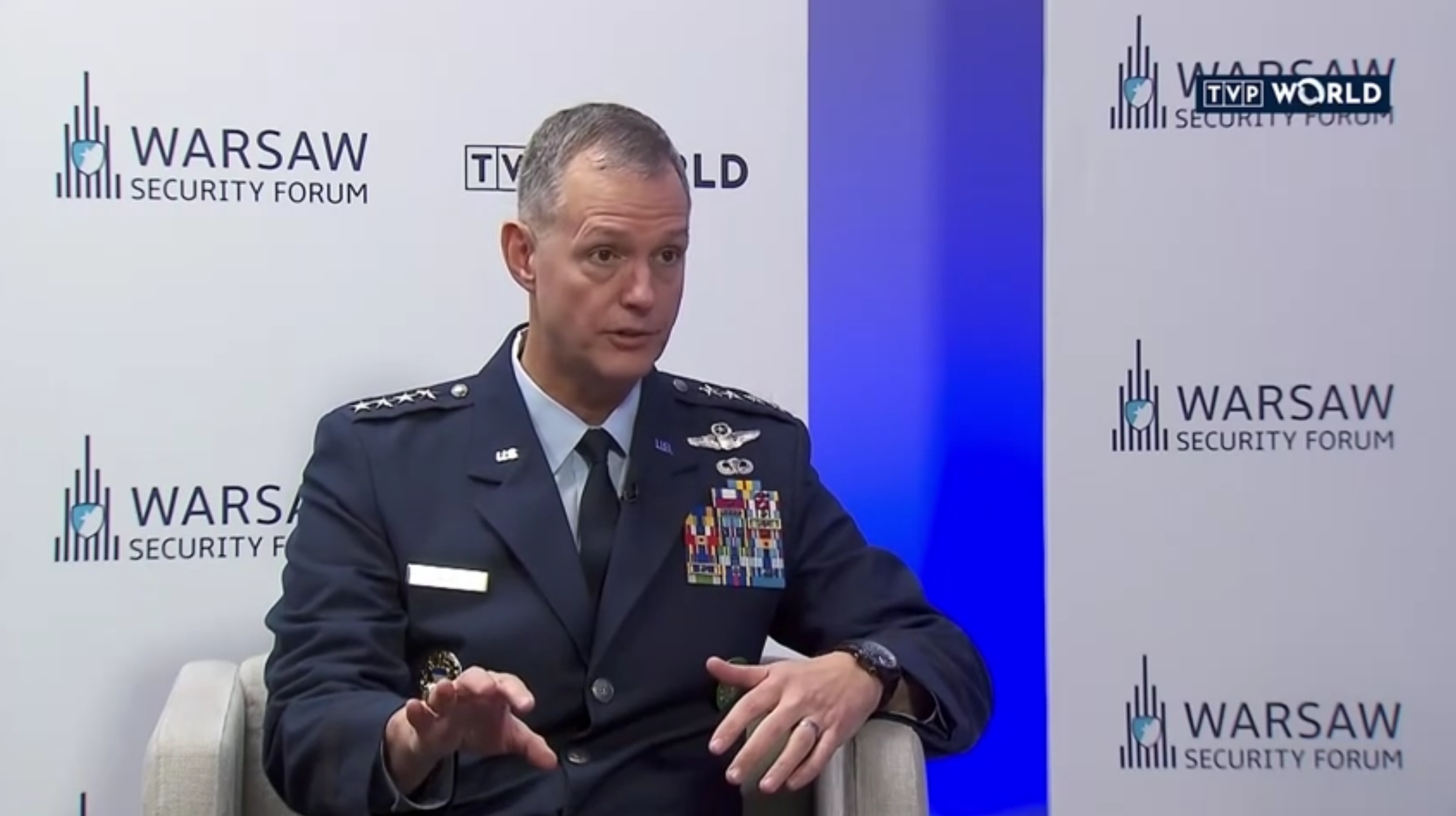
Howard Altman, Tyler Rogoway over at TWZ have a simply superb interview with General Mike Minihan, USAF (Ret.) that touches on all the right notes.
It is a thorough and wide-ranging interview, so make sure and read it all—but for the discussions we’ve had here, this is what deserves to be heard far and wide.
This is not a USAF-centric or partisan take. This is a serious set of national security problems that simply must be met.
Let’s start with the workhorse of freedom: the C-17,
Q: The C-17 Globemaster III heavy lifters have been supporting one crisis after another it seems. Have the hours accumulated faster on those airframes? What do you think should replace them and when?
A: All the things I was concerned about while I was in uniform, I remain concerned about right now. The options on the table are service life extension programs [SLEP] that the C-17 is already a candidate for. There was talk late last year about the KC-135 Stratotanker receiving another [SLEP]. You know, those types of things are concerning to me. At the end of the day, I think this nation needs to pay for the Air Force it needs, and the Air Force that it needs has a modern, capable mobility fleet. It’s not just old stuff that keeps getting patched up to get older. That’s the reality. So I’m concerned.
…and if I hear one more word from people about the C-5A in the boneyard…
Q: How are the C-5M Galaxy cargo jets doing? Are readiness rates improving? Will we need a direct replacement of something its size when their time finally comes to head to the boneyard? Was the M upgrade program successful?
A: I’m a year and a half out of the conversation. The last data point I got was from U.S. Transportation Command (TRANSCOM) commander Gen. [Randall] Reed‘s congressional testimony, where he said that the mission reliability rate, I believe, had fallen to 46%. So, if that’s true, then it’s still an enormous concern. I don’t know any part of your life where you tolerate a critical capability operating less than half the time when you need it. So C-5s are an enormous concern for me.
I think there are options out there when it comes to large-volume aircraft that exist, that are being worked now, that can help us get capability quickly. And then I think there are concepts out there, like the commercialization of the C-5 fleet, that need to be taken seriously as well and apply commercial standards, commercial supply chain to increase the readiness of it. And between a combination of those two, I think that you can sustain what America needs to project large volume lift, but also get much higher than a 46% mission reliability rate.
Q: Do you see the need for a similar sized cargo aircraft to replace the C-5 when it’s finally time for them to retire?
A: I do. I think building large, colossal aircraft is one of the hardest things to do on the planet, when you think about it. I need someone to help fact check me on this, but I don’t think more than 250 large aircraft have ever been built. You know, when you include the Hughes aircraft, include the C-5, include the Russian Antonovs, the fleet has been small because it’s hard. At the same time, it does things that nothing else can do. You don’t have to condemn your cargo to sea lift only. You can move things very quickly – large volume things, critical capabilities. And so we need to have this capability.
We are so short of what we need…and we know it.
Q: What were the biggest lessons learned by Mobility Guardian and our readiness to meet the challenge China poses in the Pacific?
A: We’ve got to explode into theater very quickly. We’ve got to be able to explode into theater in numbers and volumes and challenges that we’ve not experienced in any of the modern…operations. We’ve got to put the entire joint force in place. We’ve got to do it quick enough that it gives an enormous deterrent value and also be able to provide that decisive victory, should it get to that.
We’ve got to transition from a deploy to an employ phase very quickly. So that’s establishing hubs and spokes. And then the last thing I’ll say – this is about maneuver. We have got to maneuver at a tempo required to win. So we got to put America’s unique and amazing capabilities in a position of advantage, and then once they’re in that position of advantage, we’ve got to be lethal, and that requires logistics, sustainment, supply maneuver, all the things that have to come together in the joint force to be lethal have to be there, and we need to work extremely hard to do that.
So Mobility Guardian was really a rehearsal, and we demonstrated that we couldn’t explode into theater. We demonstrated that we could go from deploy to employ. But we also learned some hard lessons, and to get it to the scale and the volume of the tempo that we needed to be, we’ve got work to do.
We are sleepwalking into early culmination because too many people think like a child that logistics is unsexy.
Q: What were the biggest lessons learned by Mobility Guardian and our readiness to meet the challenge China poses in the Pacific?
A: We’ve got to explode into theater very quickly. We’ve got to be able to explode into theater in numbers and volumes and challenges that we’ve not experienced in any of the modern…operations. We’ve got to put the entire joint force in place. We’ve got to do it quick enough that it gives an enormous deterrent value and also be able to provide that decisive victory, should it get to that.
We’ve got to transition from a deploy to an employ phase very quickly. So that’s establishing hubs and spokes. And then the last thing I’ll say – this is about maneuver. We have got to maneuver at a tempo required to win. So we got to put America’s unique and amazing capabilities in a position of advantage, and then once they’re in that position of advantage, we’ve got to be lethal, and that requires logistics, sustainment, supply maneuver, all the things that have to come together in the joint force to be lethal have to be there, and we need to work extremely hard to do that.
So Mobility Guardian was really a rehearsal, and we demonstrated that we couldn’t explode into theater. We demonstrated that we could go from deploy to employ. But we also learned some hard lessons, and to get it to the scale and the volume of the tempo that we needed to be, we’ve got work to do.
There is an answer here: priorities.
This is all about money. You can say everything you want. You can say all the things are important. You can say ‘you’re right, General Minihan, we agree with you,’ but if it’s not followed up with resourcing, then it’s meaningless, you know? So at the end of the day, this is all about resourcing. Can we decide to be the Air Force, the joint military that puts the resourcing behind what it means to decisively defeat a near peer adversary? Or do we wait until another December 7, or another September 11 event to finally get all the things pulled together that we need to pull together. So I get it. This is expensive.
We’ve got a chance of a century right now, I believe, with this administration. When you line up the executive orders, when you line up the acquisition reform, when you look up the possibility of a $1.5 trillion defense budget, you know those things come together means that we can move faster and move differently than we’ve ever done but we’ve got to be ready to do it.
We are a maritime and aerospace power. I will keep saying it over an over until everyone understands this. We have to resource this correctly.
As I mentioned at the top of the post, this is a wide-ranging interview. Get a fresh cup of coffee and give it a full read.