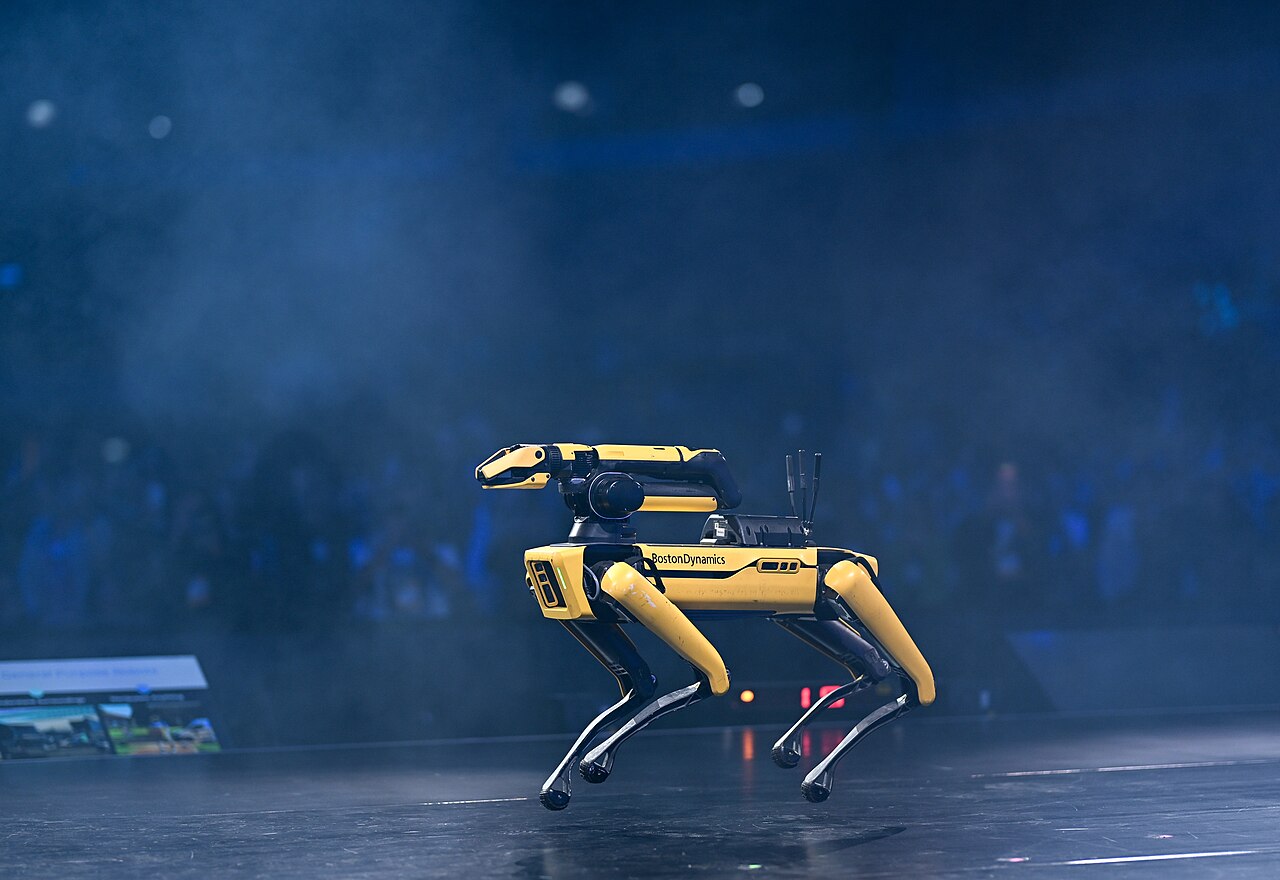








The Association of the United States Army recent meeting in Washington, D.C. was the largest yearly gathering of the U.S. Army Service. On display on the exhibit floor of the meeting were indicators of the direction that the Army is going. A robot dog on four legs sat next to a hand-held system that knocks down drones without firing a shot. A new interceptor was displayed that can chase after the faster and more deadly drones that are expected to hit the battlefield in the future.
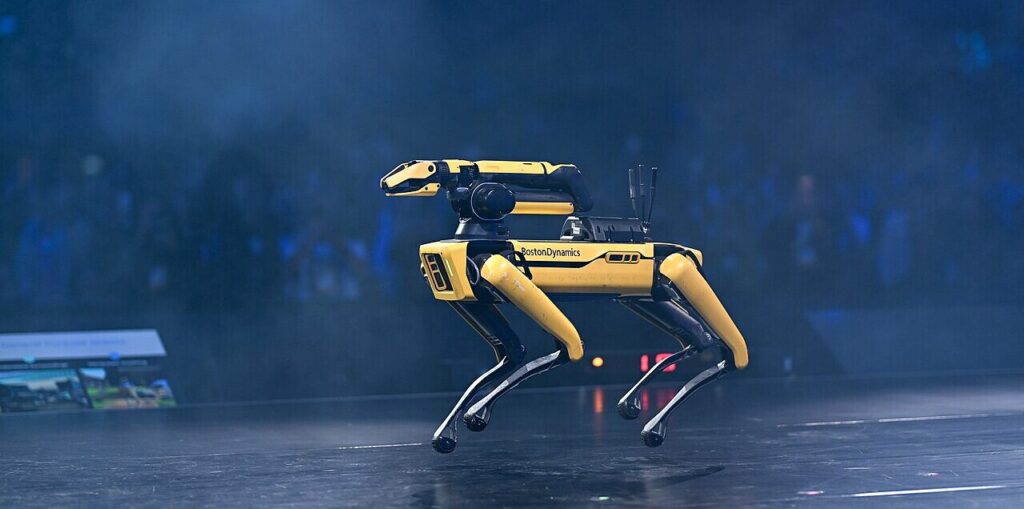
The canid-shaped robot, Scout, was designed by Ondas to be a scout in front of troops entering into buildings and underground tunnels to capture images of what’s in front of them and then send that imagery back to the operator. Brock further explained that if Scout were to take fire, that would be better than a soldier taking fire. Brock made it very clear that this system is to put a machine in the most dangerous part of waging war and keep Americans out of harm’s way.
The purchasing and budget priorities of the Department of Defense reflect the fact that drones and counter-UAS systems are becoming increasingly common, Army Under Secretary Mike Obadal, said during an appearance with Fox News Politics. The war in Ukraine, Obadal said, “cemented” counter-UAS as a core feature of modern operations. Brock noted that in recent conflict with Iran, the air defenses there would have had to deal with an enormous number of threats all at once. To be useful in such a scenario, he said, a system like this must be “affordable, cheap, recoverable, mass-producible,” as opposed to very expensive to produce in small quantities as a prototype.
As the Army evolves to support growing warfighting requirements, policy is beginning to keep pace with technology on display at the conference. The Department of War is moving toward establishing an Autonomous Warfare Command under four-star leadership, Secretary of War Pete Hegseth announced during his AUSA appearance. That announcement builds off an announcement made earlier this month at the Army’s Futures and Autonomous Systems Command, which will focus on speeding development of autonomous capabilities in aviation, armor, fires, sustainment and reconnaissance. Fox News Politics further reported that the Army is also expanding the Army’s drone and counter-drone marketplaces to allow American and allies to quickly purchase systems that have already been approved for sale within days as opposed to months.
The contract will support a number of companies. For its part, under the Army’s $982 million Lethal Unmanned Systems contract, Ondas’ Mistral subsidiary has so far won more than $240 million in orders under the deal. In August, for example, Ondas won an additional $50 million+ order under the contract. The company this summer acquired DZYNE Technologies for some $875 million. The DZYNE purchase gives Ondas, which was exhibiting a number of systems at the show including a robot dog, new hand-held and other systems such as the new IonStrike kinetic interceptor as well as the Dronebuster shown here in Washington.