








The military defines Personnel Recovery (PR) as the sum of military, diplomatic, and civil efforts to recover and reintegrate isolated personnel. Driven by the moral imperative to "Leave No One Behind", it aims to preserve critical human resources and deny adversaries intelligence or propaganda leverage in a world driven by instant coverage and viral social media posts.
Two months ago, the U.S. military launched the largest Personnel Recovery mission in military history, involving a massive armada of aircraft and hundreds of American military personnel to recover the aircrew of an F-15 E Strike Eagle. Earlier this week, the US recovered two downed aircrew of an AH-64 Apache helicopter with an autonomous surface vessel (ASV). Two incredible stories of resilience, rescue, recovery and reintegration.
The daring Combat Search and Rescue (CSAR) mission for “Dude 44” the downed F-15E crew involved 155 aircraft and hundreds of military personnel at risk over hostile Iranian territory. The operation involved nearly a hundred Special Operations Forces deployed on the ground to secure the recovery. The incredible scale and scope of this rescue effort included an air force component of 64 fighter jets, 4 B-1 and B-2 bombers, 48 refueling tankers, and other specialized rescue aircraft. A-10 Warthogs provide Close Air Support and directly engaged the enemy as MQ-9 Reaper drones maintained ISR presence, relayed constant radio communications and provided additional CAS coverage. The pilot was recovered within hours of ejecting while the Weapons System Officer (WSO) required an additional 48 hours in escape and evasion mode before he was successfully rescued early on Easter Sunday. The total cost of the CSAR Mission? Estimates range on the low end $300,000 million to half a billion dollars.
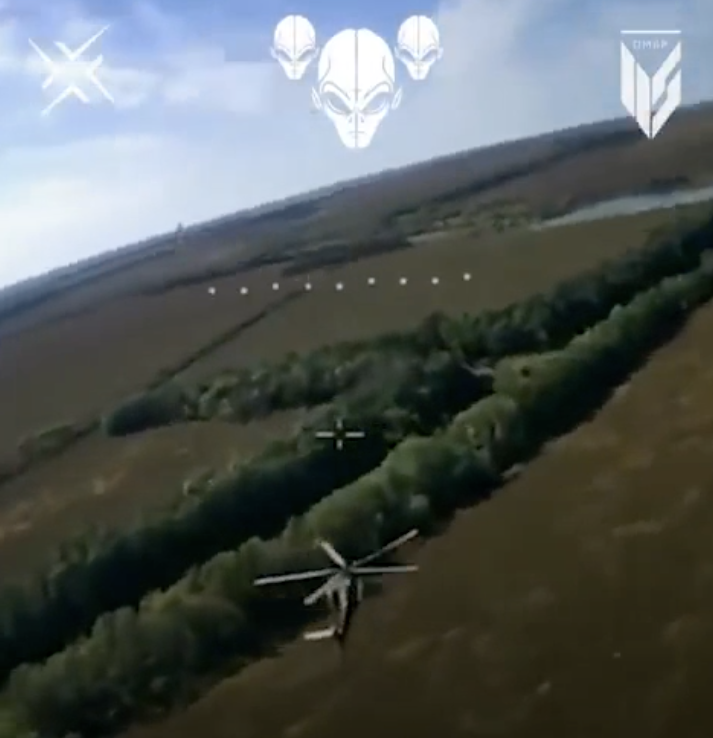
Less than two months later, two US Army Apache pilots were shot down by a Kamikaze drone into the Strait of Hormuz and Iranian territorial waters. Both were recovered after only two hours by an ASV operated by remote pilot that required no CAS assets, A-10 Warhogs, Air Force Pararescuemen or other lives in harm’s way. The Saronic Corsair, a 24-foot diesel-powered autonomous surface vessel (ASV) has a range of 1,000 nautical miles without refueling and can carry up to 1,000 pounds of payload and or passengers. For the cost of a tank of diesel, the Unmanned Search Air Rescue (USAR) cost pennies versus millions by comparison to the traditional CSAR mission.
The $90 million Strike Eagle was struck by a $90 thousand Chinese-made, shoulder-fired, heat-seeking missile that locked on to the jet’s afterburners. The $25 million dollar Apache helicopter was apparently struck by a $35,000 Iranian Shahed Kamikaze drone. These both represents a staggering cost-to-kill ratio where an inexpensive shoulder-launched system or drone successfully neutralized an advanced fourth-generation combat aircraft worth over 700 to 1,000 times its price. Essentially, the Pentagon is currently spending nearly a thousand times what the Islamic Regime equivalently invests in their national defense.
Is - shot down by a drone, rescued by a drone - the future of CSAR? On 70% of the world’s surface, it is now a possibility. From the Straits of Hormuz to the Straits of Malacca to the South China Sea where the U.S. 7th Fleet regularly conducts Freedom of Navigation Operations. U.S. Navy warships deliberately sail near disputed islands and outposts claimed by China (such as the Spratly and Paracel Islands) to challenge their excessive maritime claims.
As seen play out in Ukraine over the past five years, drones have become the face of modern warfare and both 4th and 5th generation warfare. 4th Generation Warfare (4GW) is characterized by the widespread use of cheap, decentralized technologies like drones that enable non-state actors or insurgents to fight expensive, conventional military powers due to the advantage relatively cheap drones provide in the cost-to-kill ratio equations. Yet drone technology has also evolved into 5th Generation Warfare (5GW), defined by information warfare, cyber warfare, and AI-enabled autonomous systems rather than traditional physical battlegrounds and military personnel now replaced by unmanned aircraft or autonomous vessels.
Drones have evolved from hand launched aerial video cameras to full spectrum Intelligence, Surveillance Reconnaissance (ISR) platforms, Command & Control (C2) communication relay systems, resupply delivery vehicles, armed ‘predators’ targeting High Value Targets (HWTs) to now rescue and recovery vessels for downed pilots and wounded medical evacuations (MEDEVACs) from the battlefield. Warfare has evolved fully to drones and covers the full spectrum from recon, resupply, armed attack and now personnel recovery with unmanned search and rescue (USAR).
A statement issued by Saronic on social media stated: “The U.S. military confirmed that a Saronic Corsair was used in the first-of-its-kind rescue operation following the downing of a U.S. Army helicopter. At Saronic, we build autonomous vessels to extend capability into the most demanding and dangerous environments. Knowing Corsair could play a role in helping bring our service members home safely is exactly why we build. Proud to support the men and women of the U.S. armed forces — and grateful to the team that made it possible.”
This revolutionary drone capability demonstrates the US military will be able to honor the “Leave No One Behind” ethos that is a bedrock of trust and faith each aircrew flying over hostile territory or SOF element behind enemy lines depends upon. Drones will add more resilience to the warfighter with yet another way to recover U.S. personnel. The Saronic Corsair demonstrates we can conduct highly cost-effective, unmanned search and rescue operations more clandestinely, with increased capabilities while significantly reducing the overall risk to the force in the maritime domain.
Are autonomous vessels the future of Maritime PR? Time will tell but the cost-to-kill and cost-to-benefit analysis strongly suggest, the Corsair is the future of PR. Ironically, a Corsair is a historical term for a pirate, most famously the Muslim and Ottoman privateers operating out of North Africa's Barbary Coast during the 16th to 18th centuries that attacked and captured American sailors leading to the Barbary Wars. Now the Corsairs will represent relief, rescue and reintegration when it arrives on the scene of American servicemen stranded at sea.