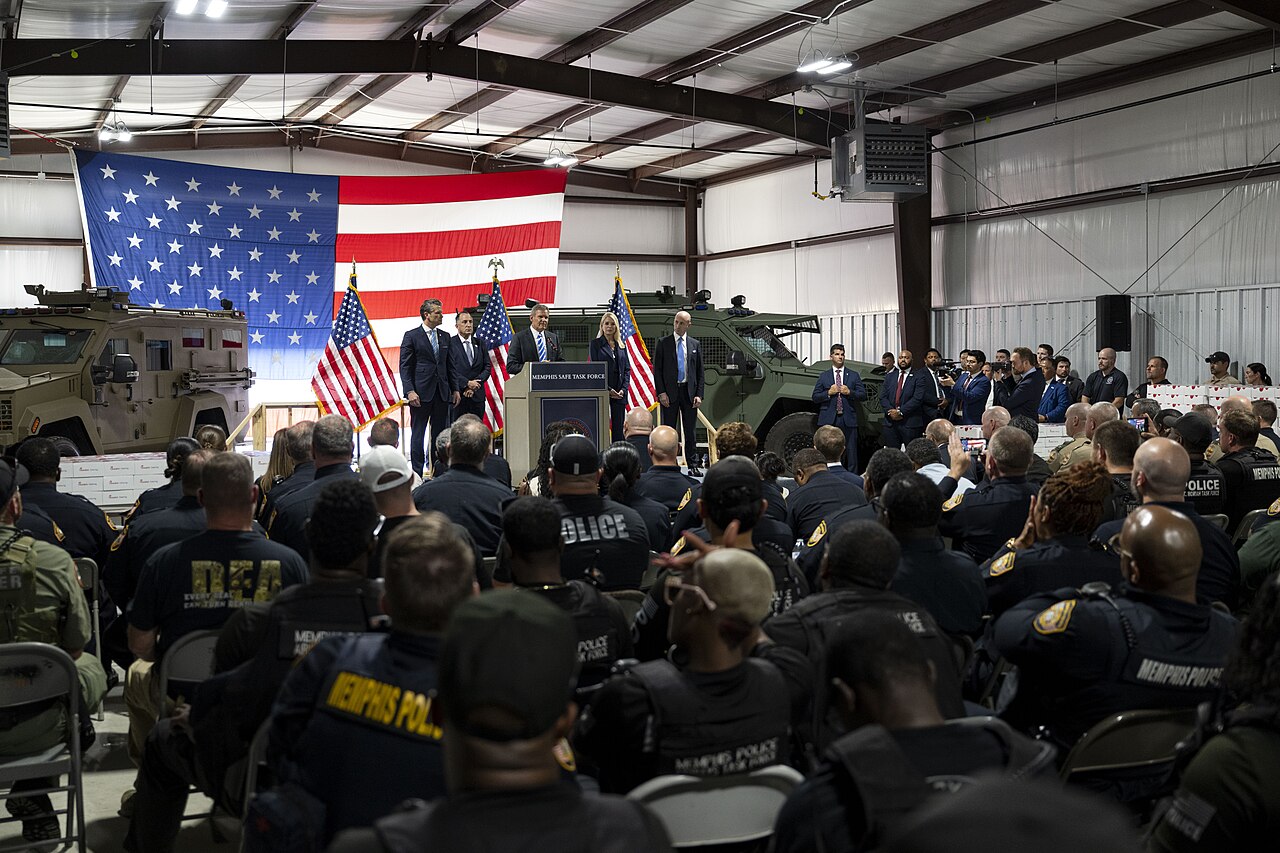








At last month’s Association of the United States Army (AUSA) conference in Washington, D.C., Secretary of War Pete Hegseth, joined on a panel by the interim leadership tasked to stand it up, reaffirmed plans for something the Pentagon has been inching toward for a decade: a four-star United States Autonomous Warfare Command (AUTOWARCOM), built to pull artificial intelligence (AI), drones, and robotic systems out of a dozen scattered service programs and into one joint structure. Hegseth called it “the fastest peacetime shift in modern military history” and said drone warfare “supercharged by AI-enabled targeting is the biggest battlefield revolution in generations.”
The announcement left the central question implied rather than answered: how will AUTOWARCOM change the way the United States fights? The answer is already taking shape in four missions that have always depended on putting people in harm’s way: intelligence, surveillance, and reconnaissance (ISR); strike; casualty evacuation; and personnel recovery. In each, autonomy is rewriting the operational math. In each, the progress is scattered across separate program offices. AUTOWARCOM is the Pentagon’s bet that one command can pull it together.
The Announcement
Hegseth first unveiled the command, known inside the building as AWC, on September 30, 2026, describing a four-star combatant command with “service-like authorities, built to scale autonomous and robotic capabilities across the joint force.” Lasting change, he said, “must be anchored in military command structures” rather than left to individual program offices. No commander has been named; Hegseth said the department will fill that seat “soon.”
According to Pentagon talking points, autonomy development will be “architected around mission threads and open interoperability standards,” so that systems “integrate organically into joint, all-domain” operations from the moment they are built, instead of being bolted onto single-service programs and retrofitted for everyone else. Put more bluntly: organize autonomy around the missions that matter, and build it to work across the joint force from day one.
ISR: The Command’s Eyes and Ears
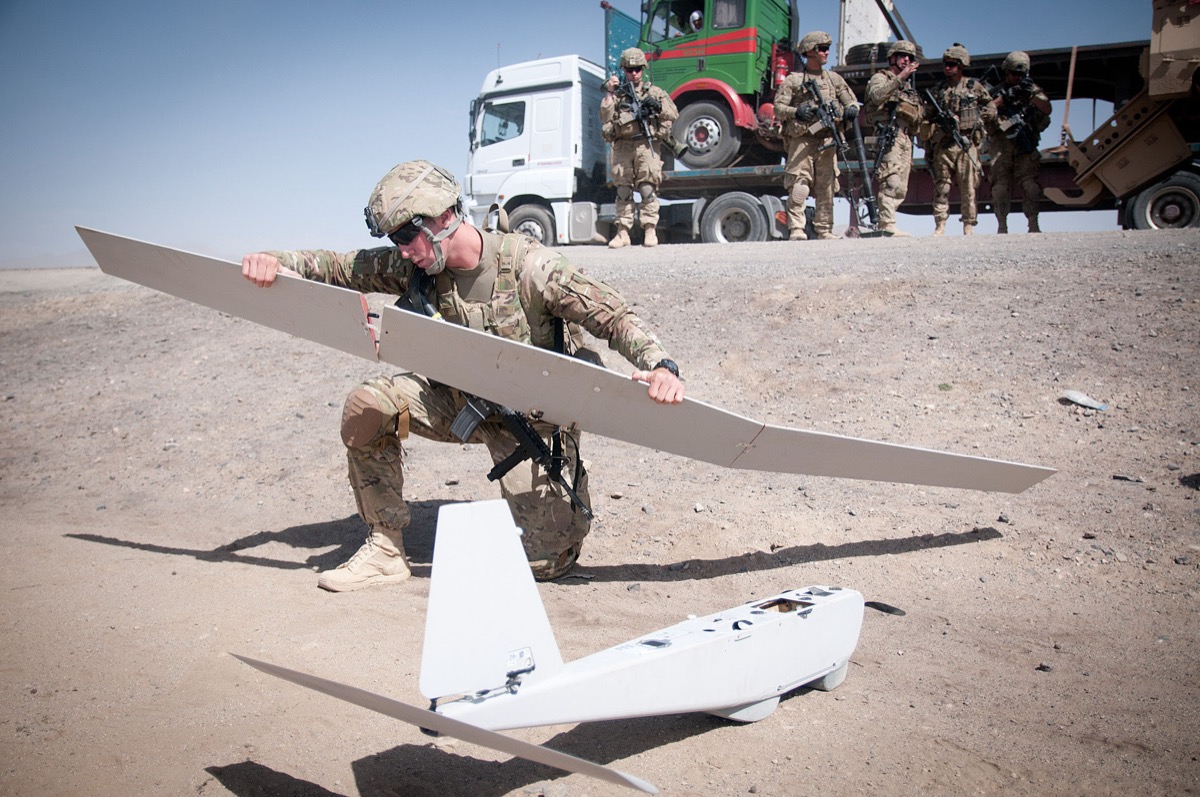
ISR will be the intelligence backbone of AUTOWARCOM. Uncrewed aerial systems carrying electro-optical/infrared (EO/IR) sensors, synthetic aperture radar, and signals intelligence (SIGINT) packages already provide persistent target tracking and wide-area surveillance across military, national security, and counterterrorism operations. That real-time, multi-domain picture is what every other autonomous system in the command will depend on to operate in contested environments.
Drone Strikes: Economy of Scale
The economics behind this push are stark. A roughly $35,000 one-way attack drone or a shoulder-fired missile can destroy a crewed aircraft worth tens of millions of dollars, a cost-to-kill ratio that Ukraine has made a daily headline and that has reshaped how militaries think about air defense. AI-enabled targeting is the other half of the pitch. Hegseth has set a goal of equipping every squad with low-cost, expendable one-way attack drones, backed by a $1 billion executive-order kick-start, a proposed $54 billion to $74 billion for drone dominance in the budget, and a request for roughly $50 billion in reconciliation funding to build out industrial capacity.
Medevac Without the Helicopter: Economy of Force
The “golden hour,” the window after a traumatic injury when treatment most improves survival, has always been the hardest constraint in battlefield medicine. Reaching a casualty usually means sending a four-person HH-60W Combat Rescue Helicopter crew and two pararescuemen into the same contested airspace that produced the casualty in the first place. Risking six airmen to save one is a poor economy-of-force gamble.
Autonomy offers another way. During this spring’s Saber Strike exercise in Poland, the U.S. Army strapped a mannequin to a Flowcopter FC-100 as part of an Autonomous Triage and Treatment Challenge with the 2nd Cavalry Regiment. The FC-100 can carry up to 1,400 pounds and flew more than 60 miles with a 220-pound load, extending the Army’s drone fleet beyond scouting, strikes, and resupply into casualty evacuation itself. As Capt. James Yu of the 75th Innovation Command put it, the Army has “many different demands to improve how medical decisions are made,” and an unmanned platform answers one of them by carrying no medic or aircrew into the kill zone.
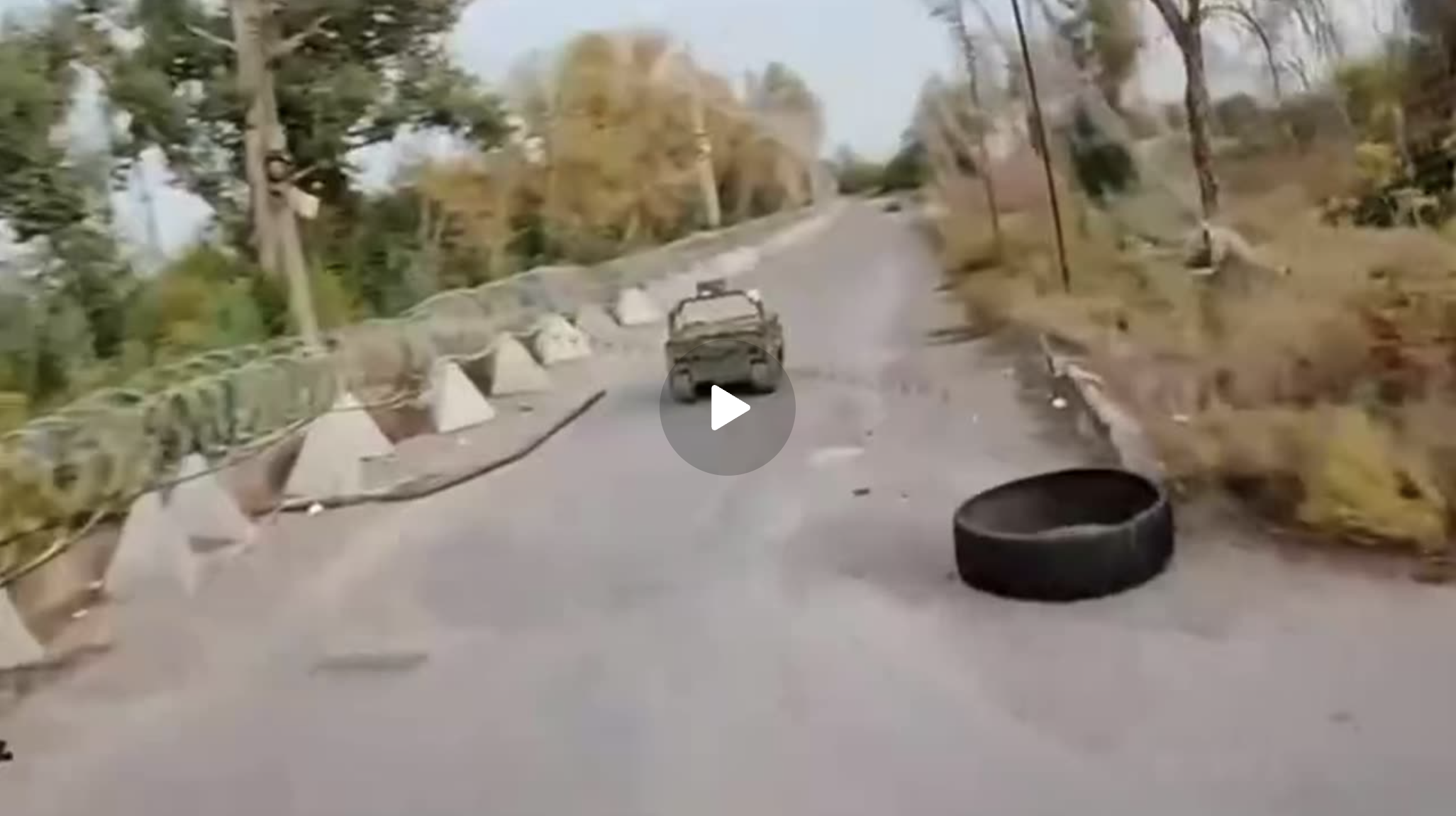
In a NATO demonstration in Estonia, a heavy-lift Grille aircraft flew a simulated casualty 50 kilometers to care, and Ukraine is already pulling wounded soldiers off the eastern front with unmanned ground vehicles and heavy aerial drones where traditional medical vehicles cannot safely go. Neither the Flowcopter nor the Grille is yet a program of record, but both are exactly the kind of fielding problem AWC was built to own: proven in demonstration, stalled in the gap between services, and waiting for one command willing to scale them.
Unmanned Combat Search and Rescue: Bringing Pilots Home Without Risking Others
No mission makes the case for autonomy more viscerally than personnel recovery (PR), and two recent incidents make it side by side. In April, after an F-15E crew was shot down over Iran, U.S. Central Command launched a classic combat search-and-rescue (CSAR) package: roughly 155 aircraft and about 100 special operations personnel on the ground, with hundreds of people put at risk to recover the pilot within hours and a weapons systems officer who evaded capture for roughly 48 hours. Estimates of the total cost range from several hundred thousand dollars to half a billion, depending on what is counted.
Two months later, near the Strait of Hormuz, two Army Apache crew members were shot down, reportedly by a kamikaze drone. This time the rescue came from a Saronic Corsair, a 24-foot, diesel-powered, remotely operated unmanned surface vessel with a 1,000-nautical-mile range and up to 1,000 pounds of payload or passenger capacity, in what Saronic called a first-of-its-kind autonomous rescue. Both crew members were recovered in about two hours, without sending a single pararescueman or close-air-support aircraft into hostile Iranian waters. The cost comparison is staggering: for roughly the price of a tank of diesel, the unmanned rescue ran pennies on the dollar against the millions a traditional CSAR mission burns through in aircraft, fuel, and risk to the force.
Command Structure as Strategy
The choice of a four-star combatant command, rather than a joint task force or program office, is itself the headline. A four-star command controls its own budget lines, acquisition authority, and promotion pipeline, which is why Hegseth paired the announcement with new military occupational specialty frameworks: a command without careers to join is just a logo. Senators had already proposed the structure in the 2027 defense policy bill, which has cleared committee but still needs House approval, so AUTOWARCOM’s October 2027 target date is a bet on legislation that has not yet passed in a sharply divided congress on the US-Iranian war. The Midterm results, only make that divide, wider.
The Bottom Line
None of these four missions waited for AWC to exist. A Corsair has already pulled two Apache pilots out of the water near Hormuz. A Grille has flown simulated casualty to care in Estonia. A Flowcopter has carried a mannequin across a Polish training range. The Ukrainians are using unmanned ground robotic platforms for remote casualty evacuations in the no-man’s land between Ukrainian and Russian lines. The technology is not the bottleneck; the system for scaling it is.
That is what a four-star command can supply: money, career paths, and the authority to force proven demonstrations into programs of record before the next war, not after it starts. The risks are real. The command rests on a bill that has not been approved, a commander who has not been named, and an oversight framework critics say does not yet exist. Speed without accountability is how a promising idea becomes a cautionary tale.
Source Documentation
State of the Force Address: Hegseth Unveils New Autonomous Warfare Command (September 30, 2026).
Defense Daily / Joint Forces Reporting: U.S. Creates New Autonomous Warfare Command to Fuse and Enhance Military Drone Ops.
Armed Forces Press: Hegseth: Autonomous Warfare Command Has Always Been End State.
Policy & Oversight Critiques: Pete Hegseth's Military of the Future: Defined by AI and an Utter Lack of Oversight.
Armed Forces Press Commentary: Dan O'Shea, "Shot Down By A Drone, Rescued By A Drone" (June 2026).
Operational Demonstrations: Autonomous Search and Medical Evacuation System Completes NATO Demonstration (Estonia Grille trial).
Army Field Evaluations: Drone Tested for Medical Evacuations in Poland (2nd Cavalry Regiment & Flowcopter FC-100).