








...do we?

China stole a march on us.
In any multiplayer game, you cannot get scope-locked. While you may focus on one enemy or one particular part of the game, others are not standing by idly, politely waiting their turn to move. No, they will encourage your distraction. They will let you indulge yourself in other problems. Meanwhile, they move through the unguarded gates into fertile fields.
We live on a large, round ball—but we think right and left because that is what our maps look like on our wall, across our screens. North-up, head-down, obsessing about the grind off some hot, dry, legacy concern or wet tropical island no one has heard of.
Where are moves taking place we are not watching?
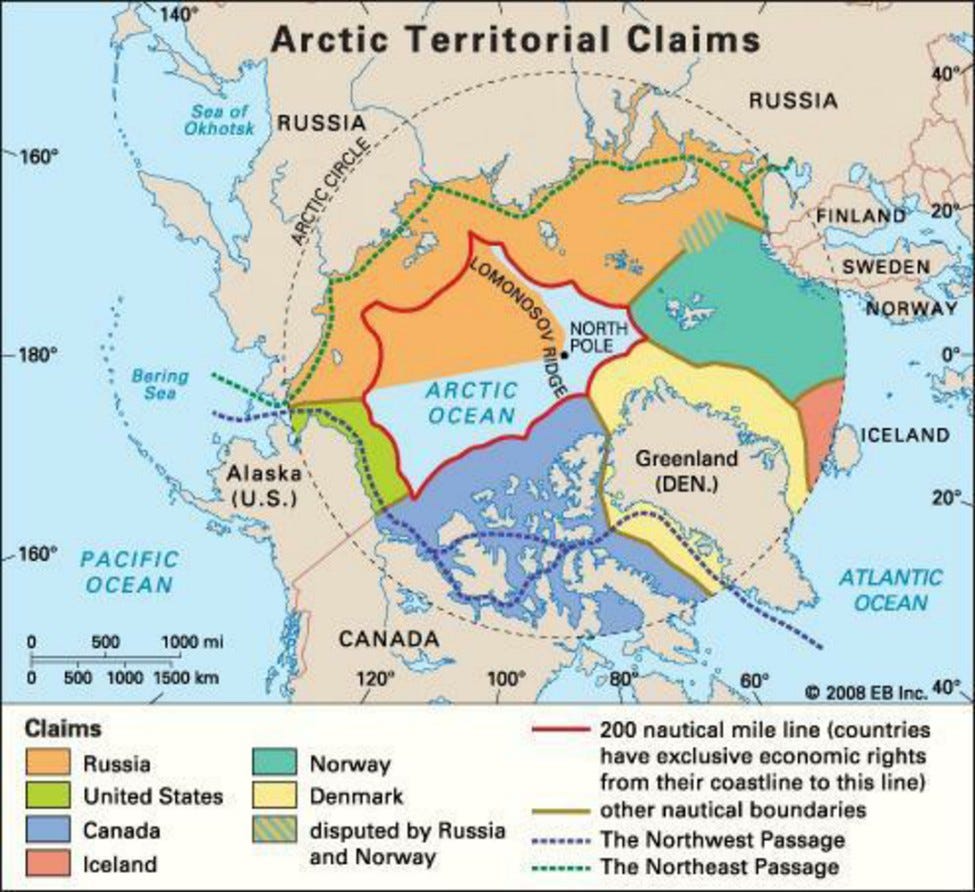
This week, the U.S. Coast Guard monitored the Chinese research ship Xue Long, which transited north through the U.S. exclusive economic zone (EEZ) and over the U.S. extended continental shelf in the Bering Sea with a declared destination of the Arctic and the Xue Long 2, another China-flagged research vessel transiting to the Arctic.
For the first time this year, Chinese vessels were tracked transiting through the U.S. EEZ and over the U.S. extended continental shelf (i.e., continental shelf beyond 200 nautical miles of shore) in the Bering Sea. In response, the U.S. Coast Guard Cutter Munro (WMSL 755) executed Operation Frontier Sentinel to actively monitor the vessels during their northbound transit. This operation is designed to protect American sovereign rights, ensure consistency with international law, and position the Coast Guard to rapidly respond to any detected malign activity.
China is not a maritime power. She is not a polar power. Indeed, she has no interests there, and yet she invests, probes, learns. Why?
Because her primary challenger is a polar power, yet pretends it isn’t. Deludes itself into thinking it is entitled to its north, unchallenged. In the Arctic, one of her most critical assets sits there, relatively unprotected, especially from the sea.
Is it?
Our National Security Strategy, amazingly, does not mention “Arctic”, “polar” or “Alaska” once.
The U.S. does not have a proper military presence at sea protecting our Arctic treasure. We do not have ice hardened warships. Adak, Kodiak, Nome and other forgotten, unrealized, or underutilized bases just sit there, unappreciated, ignored, neglected.
I can only imagine the perspective from China looking at the blessing that Alaska is to the U.S. and how entitled the Americans act towards it—and the assumptions she keeps about its security and access.
For China, the Arctic is a strategic embarrassment of riches.
China’s neighbor to the north—sick, fading, distracted and holding some of her traditional lands from the Century of Humiliation—is also an Arctic power. That challenge also awaits its time.
After long neglect and procrastination, there are positive moves. At last we have icebreakers on the way. Unarmed, but on the way. It should be seen as only a start.
Put the Russians to the side. The Chinese move to the north is longstanding and accelerating. As she is doing in many places, where traditional power have grown complacent and entitled, she is moving in—regardless of what on paper it may look like.
As mentioned earlier, China has no significant Arctic concerns, but she is a north Pacific power. She’s on the north side of the equator. What about the other pole?
She was not part of the age of exploration when the powers of the time made their rules for the Antarctic.
While we struggle to do the bare minimum to defend and reinforce our interests around our own Arctic territories in our hemisphere, we will be hard pressed to make more than a token show around Antartica.
Let’s go, as we do, to the chartroom.
What do you see?
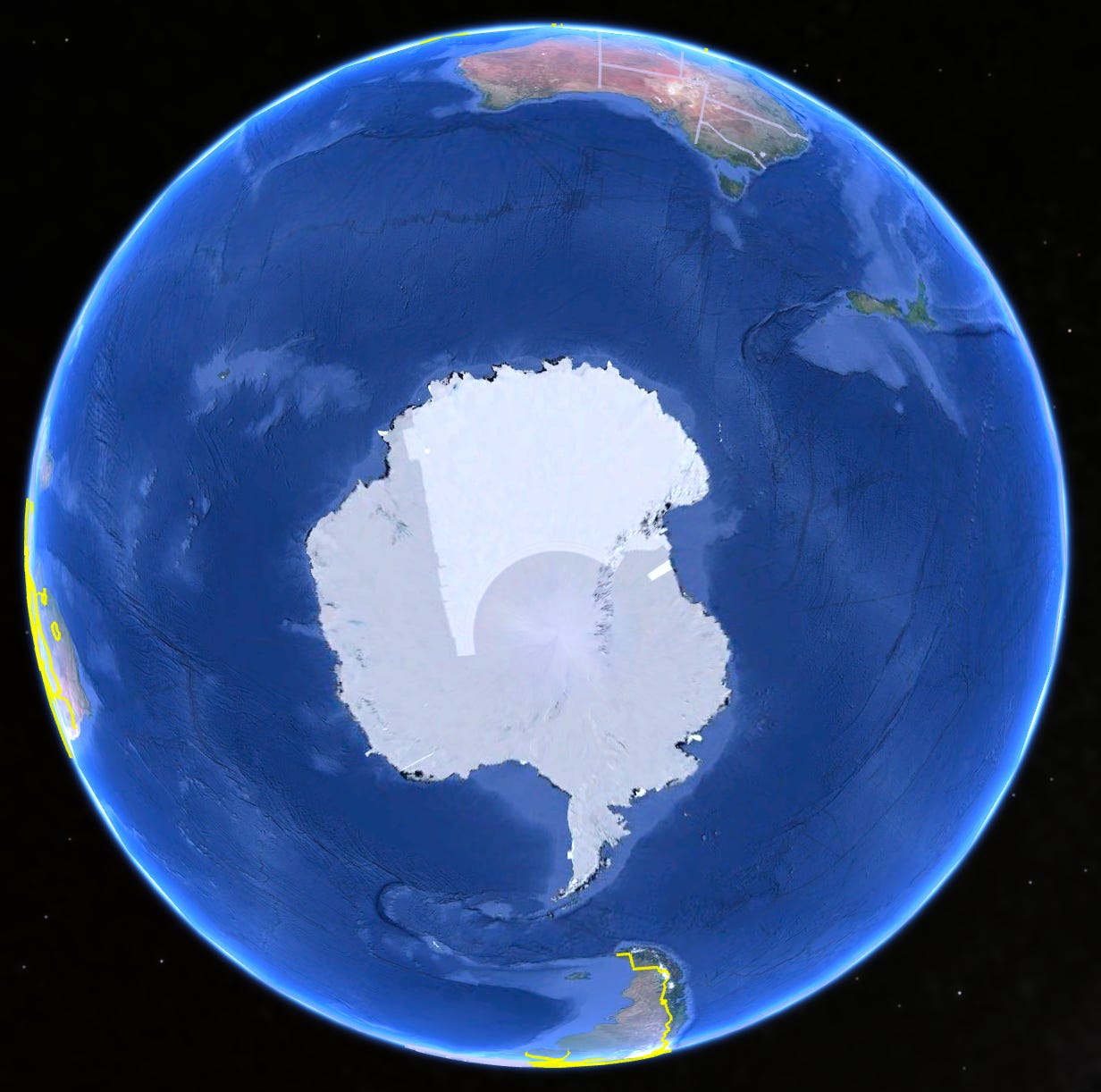
Two of our closest allies are right there. Natural Antarctic powers if there ever were some.
Over as ASPI, our friend Elizabeth Buchanan is, as usual, on the hunt.
In Antarctica, both Russia and China are redeveloping old stations and building new ones, at a remarkable pace. Advanced technologies enable polar research activities to blur the line between research and military application.
These so-called dual-use capabilities (including satellite support infrastructure, drones and sensors) support collaborative research endeavours. But they clearly have military and intelligence value, in the future, if not now, and all without violating the Antarctic Treaty’s explicit demilitarisation terms.
India joins Russia and China as a leading power in the polar regions. All three work to sustain permanent infrastructure, invest in operational experience on the ice and fund new capabilities there. Strategic competition seems to play out at the poles under the cover of benign science. States stretch and test norms via scientific research framing while accumulating strategic advantages in influence across governance forums and future resource leverage through early physical positioning.
…
Overnight, the polar regions have become strategic frontiers. Russia, China and India are three nations that appear to recognise this.
What can Australia do?
Australia’s complacent, reactive posture towards the polar regions is no longer tenable.
Canberra cannot continue treating the poles as peripheral scientific domains best managed through diplomacy. Strategic competition in the polar regions should be viewed as a single broader power contest. Sharpened geopolitical rivalries at the ends of the Earth are helping to shape the contours of our emerging international order.
My new ASPI report, Polar security: Strategic competition at the ends of the Earth, explores these issues.
The polar contest that’s now well underway has three key drivers. The first is resource insecurity. The Arctic and Antarctica hold immense hydrocarbon and critical mineral wealth. In the Arctic, most discovered resources fall within the well delimited areas of Arctic littoral states.
…
An Australian polar strategy should prioritise friend-shoring to pool scarce assets, from icebreakers to domain awareness technologies, for collective advantage. Membership in the US-led Icebreaker Collaboration Effort, or ICE Pact, must be treated as an immediate priority. This trilateral pact between the US, Canada and Finland is focused on designing and building polar icebreakers by pooling resources and industrial capacity to surge capabilities.
The assumption that the Arctic and Antarctica remain insulated zones of Cold War-era cooperation is being overtaken by the converging trinity of resource insecurity, renewed strategic competition and environmental change.
Neither Australia’s historical polar legacy nor its scientific leadership, trusted goodwill and continued quiet diplomacy will be enough to absorb the shocks of generational changes underway in the international system. Canberra must get moving.
It is good to have friends. Friendships need to be valued and nurtured. You can amplify the value of those friendships when you find areas of mutual interest.
In the north, the U.S. should do what it can to enhance its relationships with Canada, Denmark, Norway, Iceland, and even Sweden and Finland.
To the south, Australia, New Zealand, and Chile—with a nod to Argentina as she regains her economic footing—should be the power players..
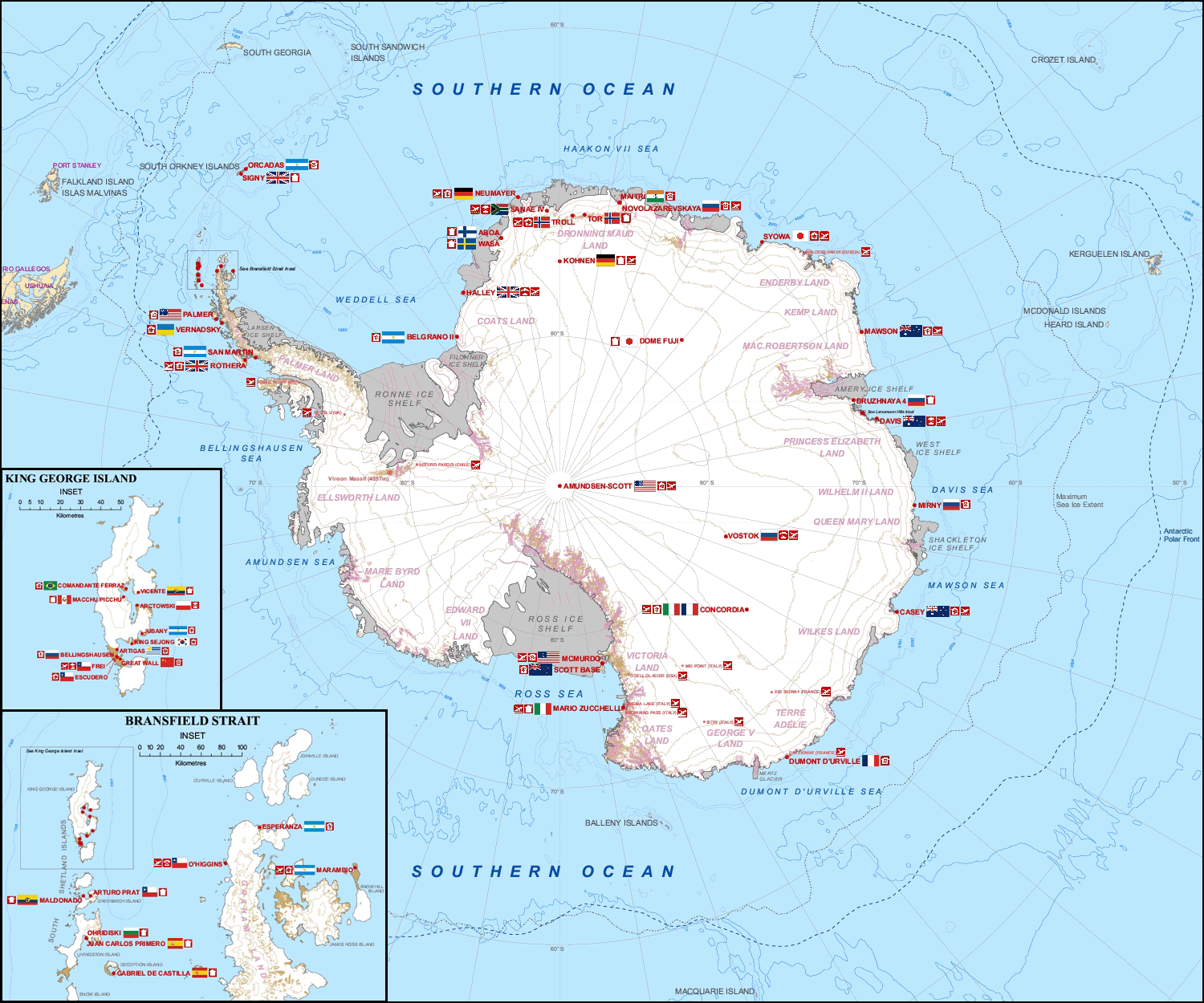
We don’t have to be everywhere if our friends can help carry the load. Look at the bases already there.
There is no reason to let China bully her way in the southern ocean as she has in the South China Sea.
We have friends, many and deep. She has few, narrow and shallow.
Leverage that…if we can.