







In November 2004, Navy aviators from the USS Nimitz Carrier Strike Group were redirected to investigate something they could not identify. Retired Cmdr. David Fravor later told Congress that four aviators saw a small white “Tic Tac” object moving abruptly above disturbed water, with no visible wings, rotors, or flight-control surfaces. Shipboard personnel, he said, had tracked similar objects for days.
For decades, military pilots, radar operators, and other personnel who reported encounters were ridiculed or treated as unstable. Some stayed quiet to protect their clearances, careers, and reputations. The government now asks those same professionals to report what many were once punished for acknowledging.
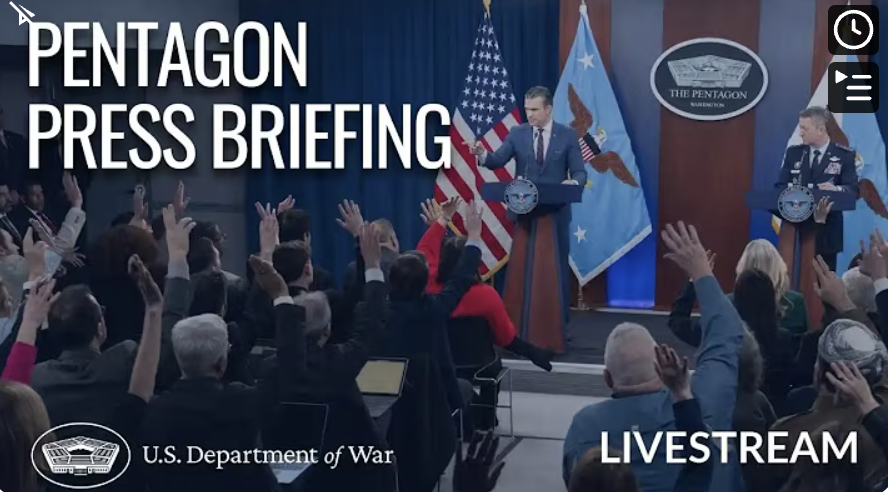
That position no longer holds. The Department of War authenticated military videos, Congress held hearings, and the Department now oversees UAP reporting. The government has not called these objects extraterrestrial. It has acknowledged unexplained military encounters affecting flight safety and national security.
The most extraordinary fact may not be what is in our skies, but how quietly the government changed its story. Officials now acknowledge authentic military footage, recurring encounters, and unresolved cases. The public still does not know what has been ruled out, what remains unexplained, or why the position changed.
A Long Record of Investigation—and Dismissal
The Air Force began formally investigating UFO reports in the late 1940s, establishing Project Sign in 1948, followed by Project Grudge and Project Blue Book. According to the National Archives, 12,618 reports were recorded across the broader 1947–1969 investigation period. Most were attributed to conventional causes; a smaller number remained unidentified.
When Blue Book ended, the Air Force concluded that no reported UFO threatened national security, demonstrated technology beyond contemporary knowledge, or showed evidence of extraterrestrial vehicles. Those conclusions matter. So does the government’s repeated return to the subject.
In January 2024, the Department of War Inspector General found that the military lacked a coordinated system for identifying, reporting, and analyzing UAP incidents. The watchdog warned that threats to national security and flight safety could remain unidentified or unaddressed. This was the government’s own Inspector General documenting a readiness and accountability failure.
The Pilots Changed the Conversation
Fravor described the object in his written testimony: “There were no Rotors, No Rotor wash, or any visible flight control surfaces like wings.” Four aviators observed it, and shipboard radar had tracked prior activity. That does not establish what it was, but it makes casual dismissal difficult.
Former Navy F/A-18 pilot Ryan Graves told Congress in 2023, “UAP are in our airspace, but they are grossly underreported. These sightings are not rare or isolated; they are routine.” He cited aviation safety, reporting stigma, and excessive classification as continuing concerns.
A June 2021 memorandum finally standardized collection and required UAP observations to be reported within two weeks—a sharp break from the old culture of ridicule.
What the Government Has—and Has Not—Admitted
In April 2020, the Department of War released the Navy videos FLIR, GIMBAL, and GOFAST, confirming them as authentic military imagery then characterized as unidentified.
Congress now requires reporting and oversight, and the Department of War placed the work under the All-domain Anomaly Resolution Office, or AARO. “Unidentified” does not mean extraterrestrial. It means the available information does not support a reliable answer. Some cases appear unusual. Others simply lack enough data.
AARO received 757 reports during its 2024 reporting period. It resolved 118 during that period and later closed another 174 as balloons, birds, drones, satellites, or aircraft. Many remained unresolved, but AARO reported no evidence of extraterrestrial beings, activity, or technology.
The Claims the Government Disputes
The dispute is now between official findings and named, cleared former officials testifying before Congress. AARO found no verifiable evidence of extraterrestrial technology. Former Department of War official and Army counterintelligence officer Luis “Lue” Elizondo told Congress in 2024, “Let me be clear: UAP are real,” and alleged that technologies not made by any government were monitoring sensitive installations.
In November 2024 House testimony, retired Rear Adm. Tim Gallaudet said a January 2015 Navy email titled “URGENT SAFETY OF FLIGHT ISSUE” warned of near-midair encounters and included the GOFAST video. He said it disappeared from recipients’ accounts the next day without explanation. His testimony does not establish who removed it or why.
Congress should neither accept extraordinary claims because they come from decorated officers nor dismiss them because they are uncomfortable. These witnesses held serious responsibilities and deserve examination. If wrong, Congress must learn how experienced professionals reached these conclusions. If right, it must determine who concealed the programs, how they were funded, and whether oversight was bypassed. Either way, the country is owed an answer.
The Disclosure Nobody Seems to Notice
For generations, UFOs occupied an uneasy place between scientific curiosity, military folklore, and Hollywood entertainment. Roswell entered the national vocabulary while military witnesses met ridicule. The subject has now entered congressional hearings, classified briefings, and national-security investigations.
The government authenticated footage, acknowledged unresolved incidents, and established an investigative office. Still, the public response remains subdued. Each hearing, witness, video, and report becomes another short news cycle. The larger question receives less attention: how did a subject once capable of ending a career become a national-security concern, and what forced that change?
The weak reaction may also come down to trust. During COVID-19, official claims changed, dissent was sometimes restricted, and mandates reached deeply into private life. The Ukraine war has again placed nuclear powers in confrontation. These events prove no common plan, but they place information of global consequence inside institutions whose credibility is already damaged.
Something is happening, even if we do not know what. It may be an intelligence failure, an adversary breakthrough, non-human technology, or several events under one label. No public evidence ties COVID, Ukraine, and UAP disclosure into one false flag. But overlapping crises demand evidence, not reassurance. Partial disclosure has replaced the old claim that nothing serious exists.
So why now? Congress created protected UAP whistleblower channels, held public and classified hearings, demanded records, and asked whether programs operated without proper oversight. Former pilots and cleared officials are putting their names and reputations behind claims once confined to anonymous leaks. The bipartisan pressure should be receiving far more attention.
Tennessee Rep. Tim Burchett alleges a cover-up. After a January 2024 classified briefing, he said lawmakers gained “some validity to what’s been said.” Three months later, he said officials had told him Americans “really can’t handle this stuff.” In April 2026, he warned later briefings could leave people “up at night.” These remarks prove no non-human origin, but they should be major news.
Whistleblowers allege recovered material, reverse-engineering efforts, and information withheld from Congress. The anonymous “Immaculate Constellation” report, entered into the record at a November 2024 House hearing, claimed multiple whistleblowers provided Congress “unambiguous evidence” of UAP, non-human intelligence, and technologies of unknown origin. Entry into the record does not verify the claims, and the underlying evidence is not public.
If recovered craft and reverse-engineering programs exist, did the government merely recover technology, or contact the intelligence behind it? No public evidence establishes either conclusion. Yet five years ago, authentic military videos, recurring encounters, classified briefings, and a funded UAP office also sounded extraordinary. The boundary of official acknowledgment has moved.
This could mark a military, cultural, and scientific shift unlike anything in modern history. Yet “trust us” is not enough when trust has been spent. The government investigates, classifies, funds, and discusses the issue behind closed doors while withholding the context needed to understand what changed or why.
The Question Is Not Aliens
An unidentified object near a carrier group, weapons range, nuclear installation, or training corridor is a defense concern until identified. Unless classified evidence shows otherwise, repeated penetration of restricted airspace by an object able to evade interception must be assessed as a potential threat.
If these systems are non-human, their existence would rank among humanity’s greatest discoveries, transforming science, religion, philosophy, and our understanding of our place in the universe. If an adversary possesses systems capable of penetrating defended airspace, monitoring sensitive operations, and evading American sensors and weapons, it may already hold a technological advantage that threatens much of our military edge.
What we do next depends on what these objects are. Misidentification calls for better collection. Adversary surveillance would expose a counterintelligence and air-defense failure. Capabilities beyond known systems would reveal a scientific, technological, or intelligence gap. Not knowing does not prove they are hostile. It does not prove they are harmless either.
The military trusted these witnesses with advanced aircraft, weapons, classified systems, and life-or-death decisions, then questioned them for reporting something outside the accepted explanation. A credible system requires professional review without ridicule or career damage.
Where Do We Go From Here?
Congress needs a joint inquiry with subpoena authority, protected testimony, contractor and special-access-program access, and independent declassification review. It must determine whether information was withheld from elected oversight and whether AARO received full access to relevant records, contractors, witnesses, and compartments.
If the allegations are false, the country deserves evidence strong enough to put them to rest. If they are true, no agency, contractor, or unelected official has the right to conceal that reality from the nation. The armed forces also need one protected reporting standard across the services, with sensor data preserved quickly enough for analysis and enforceable protection against retaliation.
Public reports should tell us which cases were resolved, which lacked enough data, and which displayed genuinely unusual characteristics. The distinction matters. Authentic footage and serious allegations are not the same as confirmed extraterrestrial craft.
The Story We Are Still Owed
For seventy years, military witnesses carried the stigma while the government struggled to explain—or chose not to pursue—what they reported. The Department of War authenticated the footage, mandates reporting, and maintains a UAP office. Many incidents have conventional explanations, and no extraterrestrial technology is publicly verified. But what forced the change? What remains classified? Has Congress received full access?
The free press should force this story into the open. Instead, it covers each video, hearing, or witness in isolation and moves on. Named pilots, cleared officials, authenticated footage, classified briefings, and bipartisan concern demand sustained investigation. A free press should challenge secrecy and concentrated power—not wait for officials to decide what citizens may know.
What concerns me most is that information capable of changing our security, culture, and understanding of humanity may be controlled by officials, contractors, and intelligence personnel who believe they should decide what the public can handle. After costly failures in Iraq, Afghanistan, intelligence, public health, and accountability, no “enlightened few” should manage humanity’s reaction without oversight.
Whatever the answer or consequences, Americans have a right to know. National security may protect sources, methods, and military capabilities. It cannot hide the basic truth indefinitely or let unelected officials decide that citizens cannot handle reality. Free people are not subjects to be managed. We have the right to see the facts, debate their meaning, prepare, and decide how to respond. No small group has the right to make that decision for the country.