








A Michigan ammunition company asked why veterans are "entitled" to anything. Here is the answer from someone who paid for it.
By Mark W. Castillon
On November 13, the Fenix Ammunition account on X asked why a veteran should be "entitled" to anything a logger, fisherman, or roofer is not. It said the company has "more respect for these guys than I do for most 'run of the mill' servicemembers," and that some troops "moved crates between bases 'outside the wire' and never saw a single round head their way." It went further, asking whether America needs construction workers and loggers or "killing brown kids on another continent for the benefit of Raytheon's shareholder dividend." That was an indictment of an entire generation of Servicemembers, posted by an ammunition company's account. The post had passed 1.74 million views by November 16, and I found no public apology as of November 20.
The account belongs to Fenix Ammunition LLC of Novi, Michigan, which sells to the shooting community, where veterans are a core customer base.
I served in the Global War on Terror. I know men who still carry what they saw, including what insurgents and terrorists did to children. Are those Soldiers responsible for those children, too? Are we responsible for every atrocity committed by the enemy because our country sent us there?
War is not clean, and American actions are not beyond scrutiny. When our forces unlawfully harm civilians, there must be accountability. But the men and women who served did not individually decide to invade Iraq or Afghanistan. Responsibility for an act, responsibility for a policy, and the burden of witnessing what people do to one another are different things. To reduce all of that to a cheap accusation about killing children is not moral clarity. It is contempt dressed up as moral superiority.
The Oath Has No Exit
Logging, commercial fishing, and roofing are dangerous work, and the people who do those jobs deserve respect and protection. But danger was never the whole case for what veterans receive. A logger who has had enough can quit on Friday. A Servicemember cannot simply walk away because the work becomes dangerous, the orders become inconvenient, or the war becomes unpopular. While subject to military authority, he remains bound by the Uniform Code of Military Justice. Unauthorized absence can be a criminal offense, not merely a career decision.
Fenix Ammunition is a limited liability company. Its owners generally enjoy protection from personal liability for the company's debts. The oath works the other way. It is a promise of unlimited liability, signed in advance, with no right to renegotiate when the terms get hard. A Servicemember gives up the freedom to leave and accepts that the government may demand his life. No businessman signs that agreement when he opens his doors.
Veterans are not owed anything because they are better Americans than loggers, roofers, or fishermen. They are owed what the country promised because the government exercised authority over their lives that no ordinary employer possesses. The obligation does not depend on whether the war was popular, whether the mission was wise, or whether the Servicemember ever fired a shot. The country made the agreement. It owes the debt.
Service Is Not Measured in Combat
The line about moving crates deserves an answer. Logistics is not a lesser job. Everything else runs on it, and the enemy knows it. The roads that carry fuel, ammunition, food, and medical supplies are part of the battlefield. Never seeing a round fired is luck. It says nothing about the obligation accepted or the importance of the mission.
A VA rating is the government recognizing a disability connected to military service. It can come from combat, training, toxic exposure, or any other circumstance of service. Combat is not a prerequisite. The schedule reflects average impairment in earning capacity, not whether a veteran can hold a job. It is compensation, not a welfare handout.
Injured civilian workers generally have workers' compensation. Servicemembers are generally barred under the Feres doctrine from suing the federal government for injuries incident to military service. Veterans' compensation is not a bonus for surviving. It is part of the government's obligation to the people it sends into harm's way.
Fraud exists, and anyone who knowingly fabricates a disability to collect compensation should be investigated and held accountable. But fraud does not invalidate legitimate claims, and the length of someone's service does not determine whether an injury is real. The government has an obligation to tell the two apart instead of treating every disabled veteran as a suspect.
What the Country Owes
A member of Congress earns $174,000 a year and can vest in a federal pension after five years, though collecting it may require waiting until retirement age. A Servicemember who gives eleven years, deployments included, generally leaves without a military retired-pay pension because the threshold is twenty. These are different systems, but the contrast is hard to ignore. The people who make the laws can vest in a federal pension after five years. The Soldiers they send to war generally need twenty to earn military retired pay.
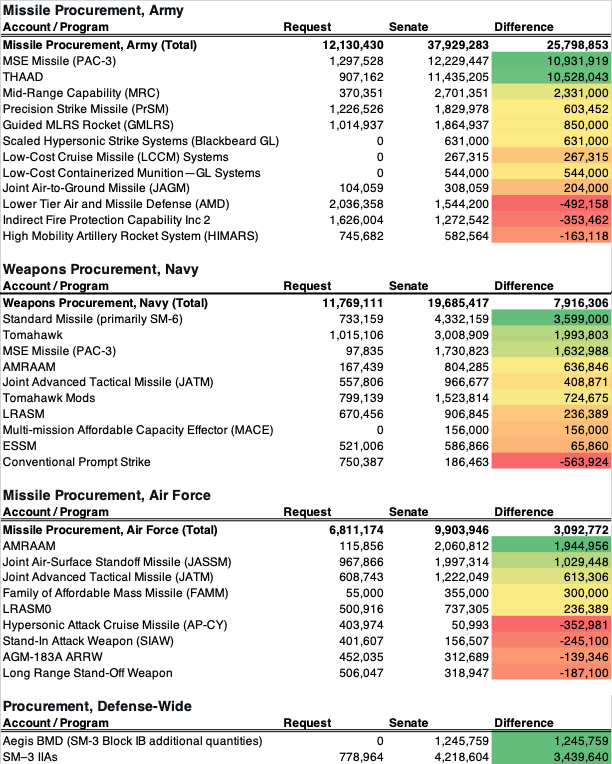
Washington finds money for its priorities. It obligated about $48 billion in foreign assistance in fiscal 2025 and appropriated about $5 billion for refugee and entrant assistance in fiscal 2026. A New York Times analysis found that roughly a quarter of lawmakers have traded individual stocks this term, and the law that governs it does not ban the practice. But veterans' compensation is different: the government made a commitment to people who completed qualifying service or suffered qualifying injuries. It cannot treat that obligation as disposable because another priority becomes more convenient.
If Washington wants to change what it owes veterans, it should say which promises it proposes to change and who will bear the cost.
What the Years Cost
I gave twenty years of my adult life to this country.
I have asked myself what I missed. Whether I would have been there when someone I love needed me, had I not been chasing the Global War on Terror. Whether my body would still do at 51 what it did at 30. Whether I could have built something of my own, an ammunition company or a fried chicken stand, with my name on the door. It is the life you never get to compare against.
While a man was building a company at home, many of us were somewhere our country sent us. Now we have children we wonder about and parents close to the end, and we were away for years we cannot get back. I am not asking for sympathy. I am saying it had a price, and a man who has never paid it does not get to call it a handout.
Those are the quiet costs. There are louder ones. There are things Soldiers saw that they still cannot explain to their families: children killed or brutalized by insurgents, civilians caught between armed groups, people they could not save. Some carry guilt for things they did. Others carry guilt for things they witnessed and could not stop.
More than 7,000 American Servicemembers were killed in the post-9/11 wars. Most have no workout named after them, no book, and no movie. Some were guarding a checkpoint, walking through a market, or sitting in the chow hall when they were killed. Their service was no smaller for it, and I have no interest in ranking war stories.
Then there were those who survived the war but did not survive the years that followed. A 2021 estimate from Brown University's Costs of War project put suicide deaths among active-duty personnel and veterans of the post-9/11 wars at 30,177, compared with 7,057 Servicemembers killed in those war operations, more than four times as many. It is a study estimate, not an exact count, and not every death can be attributed to combat. But the country does not have to prove every suicide was combat-related to take the suffering of its veterans seriously. The country sent them because it needed them. Then it asked them to be grateful for the bill.
The Institution Owes Something, Too
The obligation does not end with compensation. It extends to how the institution treats the people who trusted it with their lives and careers. The military demands absolute loyalty from those who serve while becoming increasingly selective about whom it holds accountable. I have watched commanders remove good Soldiers while others survived a dozen investigations, and counting. From where I stood, rank and relationships protected them. The political, perfumed, pampered leaders who put pillows in their rucks on road marches and had their sergeants carry their wallets and phones paid none of the price imposed on the people beneath them. Rank also pays afterward, in a defense contract or a federal job. Honor becomes expensive when your next paycheck depends on the people above you. Too many leaders discovered their principles had a price. Discipline without accountability becomes an instrument of power instead of a standard applied to everyone.
A Servicemember can be ordered into danger and separated from his family for years he will never recover. In return, the institution owes him fair treatment, due process, competent leadership, and the willingness to investigate misconduct regardless of rank. Veterans who challenge it are not disloyal. They are demanding that it live by what it taught them.
I have seen what happens when institutions protect their own reputations at the expense of the people who served them. Careers are destroyed, reputations are damaged, and the burden of proving wrongdoing falls on the people least equipped to fight the system. The leaders responsible move on. The people beneath them live with the consequences.
The reaction to this one post showed what we can do. Veterans who rarely agree on anything made the same points within hours, with unfollows, boycott pledges, and warnings passed from one to the next. Fenix lit the torch. But outrage that ends with a boycott changes very little. Turn that anger into votes, testimony, demands for timely claims decisions, protected compensation, and genuine accountability for the institutions that failed us. We will put our boots back on, and this time the fight is a lawful one, at the ballot box, in hearings, and in front of every lawmaker who made us a promise.
The men and women who served did not all fight the same war, but they accepted the same obligation: to go where the country sent them and bear what that service required. Fenix Ammunition asked why veterans are entitled to anything. The company is entitled to ask, and we are entitled to answer. I do not believe the people behind that account lie awake worrying about any of us or our families. But we can remember their words when deciding where to spend our money, and we can demand that the government remember its own promises. The honest accounting is that veterans accepted unlimited liability, and the country is still arguing about the price.
About the Author
Mark W. Castillon served in the Army National Guard from 2004 to 2024, including deployments in support of Operations Iraqi Freedom and New Dawn and emergency responses from Hurricane Katrina through COVID-19. He writes on veteran mental health, whistleblower protection, leadership accountability, and due-process reform.