








Lost in the 25th Anniversary remembrance weekend of 11 SEP 2001 was the fact that there were significant changes on the ground in the festering sore on the other side of the Arabian Peninsula from the Persian Gulf, Yemen.
Bridget Toomey at FDD's Long War Journal has a good summary.
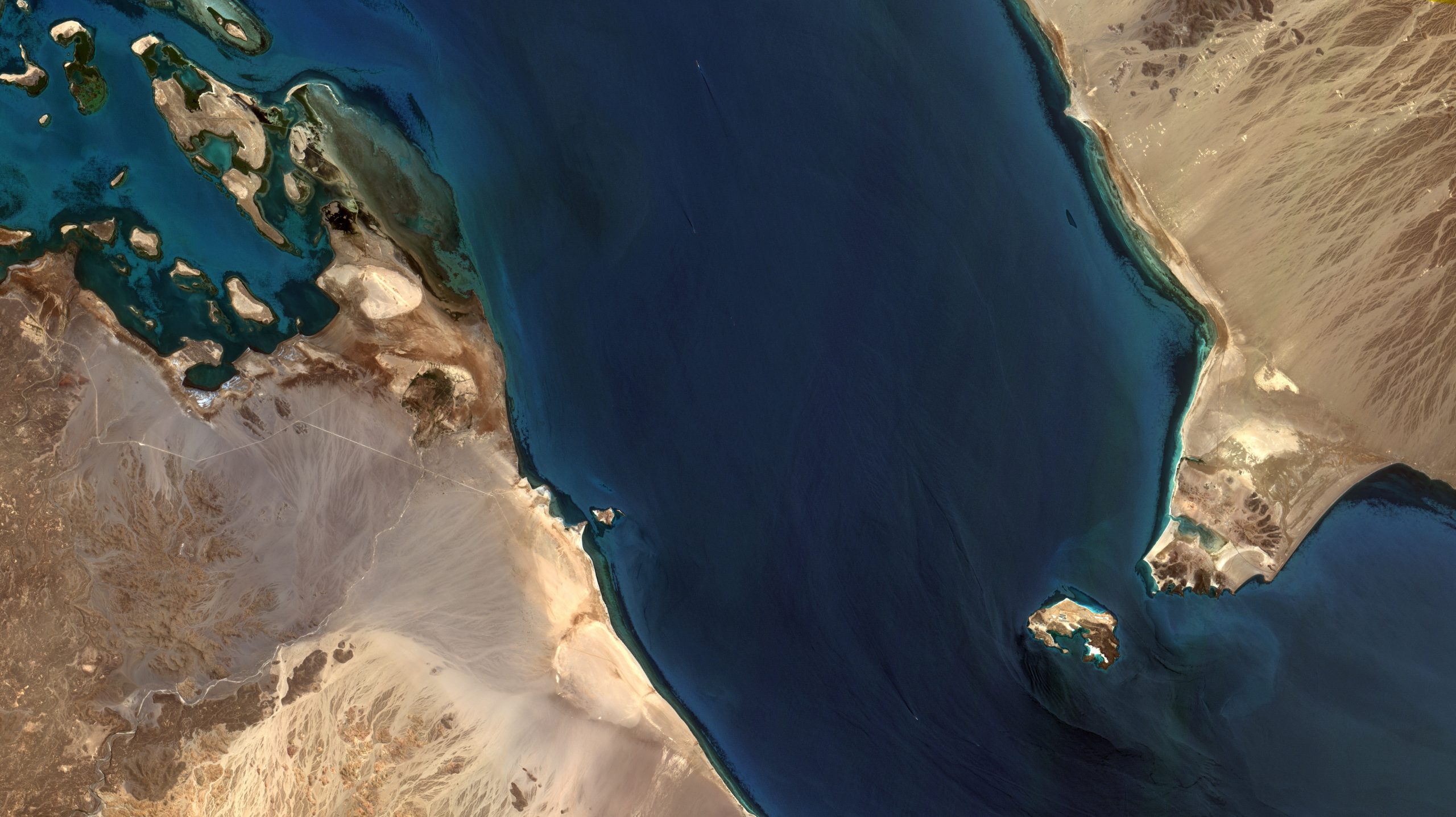
On September 10, the Houthis seized the strategic port city of Mocha on Yemen's southern Red Sea coast. The next day, the Iran-backed group pushed south, culminating with the capture of the remaining Red Sea coast and Perim Island in the middle of the Bab al Mandeb Strait, the strategic chokepoint at the southern entrance to the Red Sea. The Houthis also seized the Hanish Islands, an archipelago in the southern Red Sea roughly 100 miles north of Bab al Mandeb. Control of the coast and islands would give the Houthis a direct hold on the Red Sea chokepoint through which significant international shipping flows. However, on September 13, the Yemeni Armed Forces media center announced that government troops had recovered some territory near Bab al Mandeb.
The Houthis rapid advance down Yemen's west coast came after the Iran-backed group began a substantial campaign against forces of the internationally recognized government of Yemen on August 6.
The southern west coast and islands were held by the National Resistance Forces (NRF), a government-aligned paramilitary organization led by Tariq Saleh, vice president of the Presidential Leadership Council (PLC), Yemen's eight-man executive body.
We'll get back to that in a moment, but I'd like to set the table a bit first.
Yemen is like a few other nations that history warns everyone just not to mess around with too much. Russia is one. We're familiar with what happens when you ignore the warnings about Afghanistan. You can put Vietnam on that list, and China too. There is never enough juice worth the squeeze to justify a general war against any of them unless you think you are really ready—and able—to pay the price.
Many in the West forget what happened in Yemen 60 years ago.
Here's the executive summary:
The civil war between the Egyptian-backed republican government forces and the Saudi-sponsored royalist opposition served as a two-level proxy war, with the Soviet Union funding the Egyptians and the United States funding the Saudis.
Amidst all this, the USAID mission was ransacked by a mob, which carted away a safe filled with confidential materials. Moreover, the mission had, in the words of one interviewee, committed "the most horrific security violation" by making copies of highly classified materials in contravention of regulations. Fortunately, those were not stolen but were destroyed quickly once American staff were able to return to the building.
The civil war dragged on for eight years, tying down 60,000 Egyptian troops during the 1967 Arab-Israeli War, which many believe contributed to the Arab defeat. For this reason, in addition to the million-dollar per day cost to the Egyptian government to station troops in North Yemen, the war is known as "Egypt's Vietnam."
The Wiki summary of the butcher's bill is pretty good.

Now, as we like to do, let's go to the map room.
Here's the map in 1967, right before Egypt (black) decided it had enough.

Here is the map effective 14 SEP 2026.

History is sticky.
In any event, when everyone decided they had enough in 1970, both Egypt and Saudi Arabia were worse off for their efforts. The Saudis have been at it again since 2015, with little success.
Keep that in mind when people (and I fall into this trap now and then too) decide that they hope that the Arabs led by Saudi will fix it.
Yes, the Houthis have made gains, but everyone should cool their jets when it comes to wanting to get even further tangled in this mess. The Yemeni always seem to fight harder and are more resilient than those on the outside who think they can impose their will.
I would hope the experience of this nation over the last 35 years from Somalia to Iraq to Afghanistan has soaked in by now.
We don't need boots on the ground. We don't need to take islands in the Red Sea. We unquestionably don't need to do anything more than make the rubble bounce, should it please us.
Mocha's strategic importance comes from its geography. The port city is roughly 50 miles north of Bab al Mandeb and historically served as an important trade hub. Before the Houthis' seizure, it was also the headquarters of the NRF, which used the west coast and islands to monitor Houthi maritime activity and conduct major interceptions of Houthi weapons smuggling.
Perim Island, also known as Mayun, was also controlled by the NRF and served as a key base for the force to monitor the Red Sea, especially for Houthi smuggling through Bab al Mandeb or across the Red Sea from Africa. Perim sits within the maritime chokepoint, which is only around 20 miles wide. The eastern channel is roughly 2 miles wide and used by local and smaller vessels. The western channel, which is used by international shipping, is roughly 16 miles wide. The Hanish Islands play a similar role by allowing government-aligned forces to monitor Houthi maritime activity and serving as a base for counter-smuggling operations. The UAE previously invested in infrastructure on the islands, including airstrips.
Prior to the Houthi campaign against commercial shipping begun in late 2023 over the war in Gaza, over 9 million oil barrels per day (bpd) transited Bab al Mandeb. While the Houthis' maritime attacks led oil transits to drop by over half in 2024 and 2025, Iran's closure of Hormuz led to a jump in oil products transiting Bab al Mandeb to over 7 million bpd in June, according to data from the maritime intelligence firm Kpler. Most of this total was Saudi exports rerouted from the Persian Gulf to the Red Sea via the cross-kingdom East-West pipeline.
There is a history here that goes back for decades—even centuries if you want to go into Arabian tribal history—which you don't want to. Yes, the Houthis are Iranian proxies, but they are not fully controlled by Iran, just as North Vietnam was in the communist bloc, though not fully controlled by the Soviet Union. They have their own interests, grievances, and priorities.
On September 10, Riyadh closed the pipeline after attacks from Iran-backed militias in Iraq, likely conducted in coordination with the Houthis. The Houthis previously announced a maritime blockade of Saudi Arabia on July 20 and have since attacked the kingdom's oil facilities and ships. Control of the southern Red Sea coast and Perim Island better positions the group to choke off exports via Bab al Mandeb, though Riyadh can route some oil north through the Suez Canal.
As Reuters reported on 13 SEP, that's not a good thing for anyone.
Saudi Arabia will run out of oil stocks for exports if it doesn't restart its major pipeline to the Red Sea within days, leading to a loss of up to 4% of global supply, Saudi oil buyers and traders said.
A further decline in Saudi flows will worsen the global supply crunch, which has already pushed global fuel prices to record highs, spurred inflation around the world and sent U.S. bond yields to the highest levels since the 2008 financial crisis.
The free flow of oil at market prices and uncontested access to the open seas, well, those are in our interest and everyone else.
A Yemeni source affiliated with the country's armed forces said that military leaders requested air support from Saudi Arabia, the sponsor of Yemen's internationally recognized government, to counter the advancing Houthis, but none came. American officials told Axios that Saudi Crown Prince Mohammed bin Salman requested that the United States conduct airstrikes against the advancing Houthis on September 10, but President Trump declined. Instead, the United States is providing Saudi Arabia with intelligence and targeting data.
"The Houthis called us, and they don't want to fight with us," Trump told reporters on September 12. "They would much prefer not having us involved, and they're letting most ships go through. There's just one country that they're not too happy with, and we'll get that straightened out," he added.
The Trump administration previously conducted Operation Rough Rider, a roughly seven-week bombing campaign against the Houthis, that struck over 1,000 targets between March and May. Rough Rider ended with a May 6 ceasefire between the United States and the Houthis that amounted to an agreement not to attack each other but failed to protect international shipping. The Houthis attacked two commercial vessels within two months of the agreement.
Monday night, as I write this, the Saudi cities of Yanbu and Jeddah are both issuing warnings of an attack from Yemen.
All that is ashore and should be dealt with by the Saudis. Sounds like we're trying to keep it that way.
US Vice President JD Vance said Monday that Washington has been engaged in "direct conversations" with the Houthis and is "on top" of the situation following the Iran-backed group's seizure of the strategic island of Mayun, also known as Perim, in the Red Sea, Anadolu reports.
Speaking to reporters at Joint Base Andrews before departing for Kansas, Vance was asked whether he was concerned about the Houthi takeover and how the US planned to respond.
"We've been in constant contact with the Emiratis, the Saudis, and others who are affected in the region," Vance said. "It's something the United States administration is very much on top of.
"We've also been engaged in direct conversations with the Houthis themselves, so we actually feel like we are on top of the situation," he said.
Time to focus.
We will not enforce our will on Yemen. Sixty years ago, even the Egyptians using poison gas couldn't.
Saudi Arabia, with the occasional assist by UAE, has been trying for the last 11.5 years to little effect. There is no support with the American people to do more than what we have already done against the Houthis. Those proposing more are just setting the nation up for folly.
Even the "low risk" option, isn't. The U.S. throwing Marines onto uninhabitable islands on a whim would, in a broader context, only be of benefit to those who wish our nation and our interests ill.
If the Houthis go against our interests—consult the book on punitive expeditions—except keep feet wet.
If they don't and want to talk, talk.