










How the Army Rewards Self-Protection and Calls It Leadership

A subordinate walks into a commander’s office with a serious problem — a readiness shortfall, credible misconduct, a flawed decision, or evidence that someone is about to be treated unfairly. He believes leadership will want to know. After all, leaders are taught that integrity demands confronting problems before they grow.
Instead, the commander shifts uncomfortably in his chair. The issue is inconvenient. The people involved are influential. There are careers at stake, including his own. The subordinate leaves with a lesson that is never taught at leadership schools: some leaders fear ownership of a problem more than the problem itself.
There is a particular type of leader almost every Soldier encounters. He is rarely the loudest officer in the room, the obvious incompetent, or the tyrant whose behavior ends a career. More often, he looks successful: strong evaluations, desirable assignments, steady promotions. While better leaders grow frustrated and stall or leave, he continues to climb.
The Army constantly speaks about courage. Personal courage is one of its core values, and leadership doctrine emphasizes character, integrity, stewardship, and moral courage. ADP 6-22 states that leaders demonstrate moral courage when they do the right thing even when it is unpopular, difficult, or dangerous. Yet after two decades in uniform, I saw too many careers built not on courage, but on self-protection.
The most dangerous leader is often not the openly corrupt one.
It is the quiet institutional coward who gets promoted.
The Closed Door
Anyone who has spent enough time in uniform has seen this scene before. A subordinate brings forward a legitimate problem—a readiness issue, a misconduct concern, a brewing crisis, or an uncomfortable truth.
Instead of confronting it, the institutional coward sees personal risk.
The calculation is simple: once a leader acknowledges the problem, he owns it—and ownership brings risk.
Investigations are discouraged because they produce findings. Difficult conversations are postponed because they require decisions. Warnings are ignored because acknowledging them creates obligations. The goal is never to solve the problem. The goal is to ensure the problem belongs to someone else.
This type of leader is not always passive. Sometimes he is highly energetic when process can be used as a weapon, when ambiguity can be exploited, or when someone else can be isolated under the appearance of fairness.
Ironically, these same leaders often become experts in the language of leadership. They attend conferences, quote doctrine, and speak confidently about accountability, stewardship, and courage.
Yet when genuine moral courage is required, they are nowhere to be found.
Borrowed Courage
Leadership vacuums rarely remain empty.
When senior leaders refuse to act, someone else inevitably steps forward. A first sergeant addresses the misconduct. An executive officer accepts the risk of making an unpopular decision. A senior NCO confronts the issue everyone else wishes would disappear.
They absorb the criticism, pressure, and consequences because they believe standards matter more than comfort.
The self-protective leader waits.
He waits for the controversy to pass, for someone else to make the difficult decision, and for the outcome to become clear. Then he reappears.
The success becomes the leader’s briefing. The accomplishment becomes his talking point. The award becomes his recognition.
The courage belonged to someone else, but the credit rarely did.
Stewardship Without Sacrifice
Army doctrine speaks frequently about stewardship, but stewardship means more than managing equipment, budgets, or readiness metrics.
At its core, stewardship means protecting people and accepting responsibility for their welfare.
I watched some leaders accept professional risk to advocate for their soldiers. They questioned flawed decisions and raised concerns when it would have been easier to stay quiet.
Others watched the same conditions and calculated what position would leave them safest when the dust settled.
The question quietly shifted from What is best for my soldiers? to What is safest for me?
Soldiers always notice the difference between leaders who accept risk for their people and those who calculate personal safety first.
Selective Accountability
The institutional coward becomes remarkably skilled at applying standards selectively.
When dealing with politically vulnerable individuals, every regulation matters. Every allegation demands immediate action.
When dealing with favored individuals, context suddenly becomes important. Complaints are minimized. Obvious issues remain unresolved because addressing them would create discomfort for people in positions of influence.
Selective accountability rarely announces itself as favoritism. It appears in the language of policy, in selective urgency, in which facts are pursued and which are quietly ignored. One person is investigated with zeal. Another is protected by hesitation, nuance, and delay.
Few things destroy confidence in leadership faster than the perception of unequal accountability.
Soldiers quickly learn which rules are absolute and which rules depend on who is involved.
Cynicism follows.
The Human Cost
Sometimes the failure to act does not merely delay a decision — it destroys a life.
These cases are not universal, but they are also not rare.
These failures appear wherever institutions teach leaders that self-protection matters more than truth.
A subordinate comes forward with evidence that an accusation is false. The commander understands the facts and the stakes.
Instead of intervening, the leader chooses silence.
Investigations proceed unchecked. Careers are damaged. Families absorb the consequences. Futures narrow. The leader who could have intervened protects his own position while convincing himself it is not his fight.
The subordinate is left to fight alone—branded, isolated, and abandoned by the institution that promised fairness and due process.
The commander moves on with a clean record and another successful tour.
More often than not, this is not the result of malice. It is the predictable consequence of leaders who value safety more than truth.
Soldiers learn a brutal lesson:
Loyalty often flows only upward.
The Careerist Class
The deeper problem is not that weak leaders exist. It is that institutions often reward the very qualities they claim to oppose: managing risk upward, protecting oneself early, and preserving image at all costs.
This is not merely anecdotal. In the 2010 Center for Army Leadership Annual Survey of Army Leadership, roughly one in five respondents reported serving under a superior who displayed toxic behavior. Subsequent studies have shown similar patterns persisting.
Institutions rarely announce that they reward cowardice, but their incentives often do exactly that. Promotion systems reward risk avoidance, polished reporting, loyalty upward, and the management of appearances. Leaders are often punished more quickly for bad news delivered honestly than for bad news delayed, softened, or buried. Over time, those incentives do not merely tolerate self-protective leaders. They produce them.
The professional asks:
What is right?
What serves the mission?
The careerist asks:
What is safest?
What serves my future?
Over time, institutions fill with people who understand those incentives perfectly.
That should alarm anyone who cares about readiness because the traits that build a safe career are often the opposite of the traits required during crisis, uncertainty, or combat.
When Silence Reaches the Top
The consequences extend far beyond a single unit, because institutions eventually elevate the people they reward.
An officer who learns that silence is safer than truth at the company level often carries those lessons upward. By the time he reaches senior leadership, the stakes are measured not in evaluations but in wars.
That habit does not become wisdom just because the stakes get larger.
The risk-averse commander who avoids difficult truths as a captain does not suddenly become courageous as a colonel or general. He simply acquires more authority, a larger staff, and greater consequences when that silence fails.
For two decades, military leaders delivered progress reports on Iraq and Afghanistan even as conditions on the ground often remained fragile, dependent on American support, and out of step with official narratives.
The Afghanistan Papers, released by The Washington Post in 2019, showed how often senior officials privately acknowledged deep problems even while public messaging projected confidence and progress.
The problem was not a lack of resources, talent, or commitment. The United States possessed all three in abundance. The problem was often an institutional culture that made uncomfortable truths professionally dangerous and optimistic assessments professionally safe.
Reporting success opened doors. Reporting failure invited scrutiny. Over time, those incentives shaped not only careers, but strategy.
The same instinct that causes a commander to ignore a readiness problem because it might damage an evaluation can, when repeated across careers and years of conflict, distort strategic decision-making on a national scale.
Many soldiers returned home wondering how years of reported progress produced partner forces and governments that largely collapsed once American support was withdrawn.
No single factor explains the outcome of either war. Strategic failure is always more complicated than a single cause.
But institutions should honestly examine whether they promoted enough leaders willing to deliver unwelcome truths when those truths mattered most.
When organizations reward perception management over candor, risk avoidance over accountability, and political survival over moral courage, they should not be surprised when reality eventually arrives with a bill that cannot be ignored.
Many leaders who mastered institutional survival transitioned smoothly into senior positions, consulting firms, defense contractors, or policy circles. Their careers remained intact.
The wars did not.
A promotion proves only that someone succeeded within the system, not that he served it well.
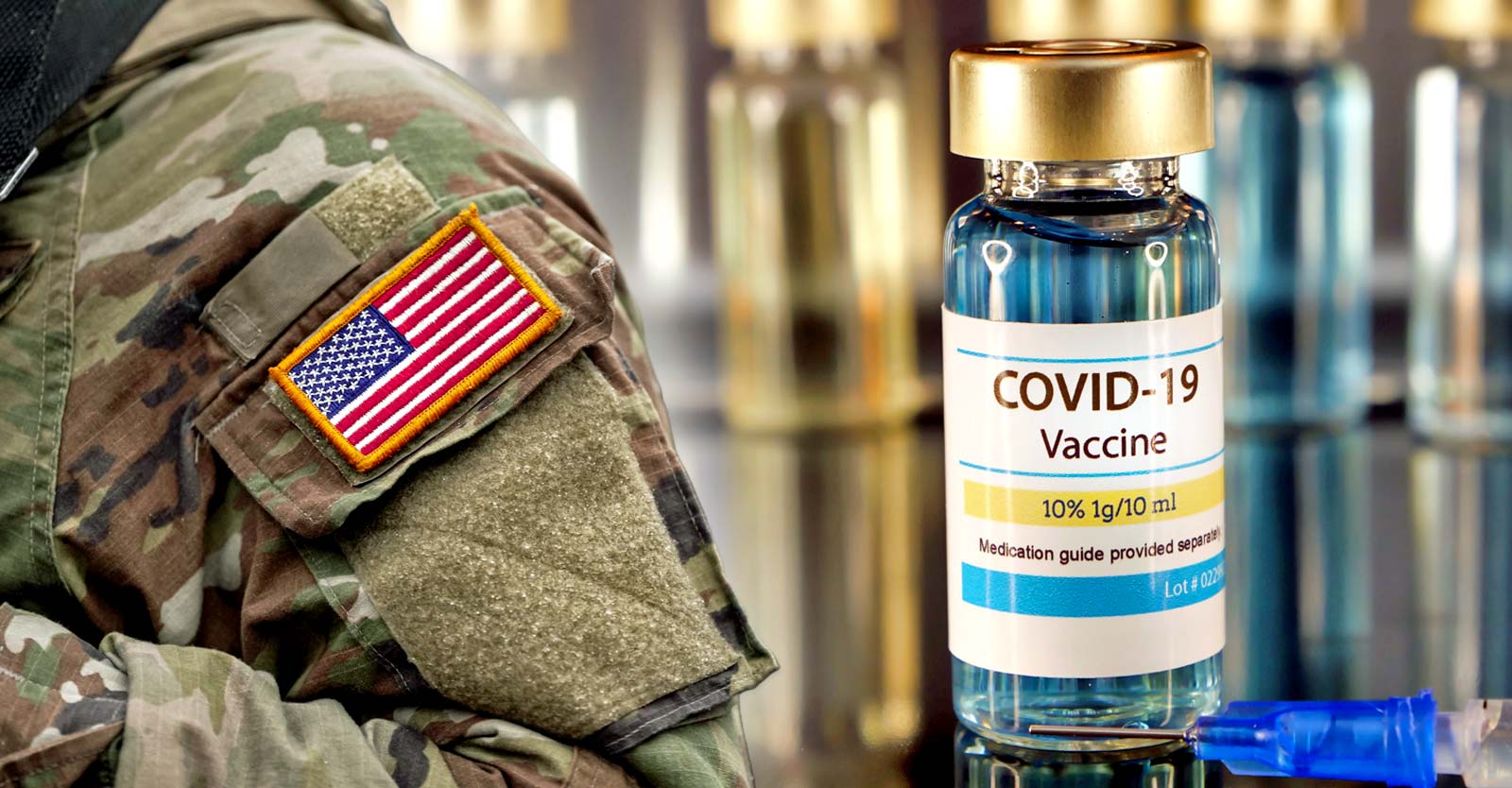
There is another irony worth naming. The point is not whether every COVID policy was right or wrong. It is that many leaders showed the same instinct seen throughout institutions: when conformity was rewarded, they conformed; when dissent carried professional risk, they stayed silent; and when public opinion shifted, many shifted with it. The underlying behavior remained unchanged. Some of the same voices that now posture as defenders of courage were nowhere to be found when dissent carried consequences. But courage after the risk has passed is not courage. It is reputation management.
The Coward Who Gets Promoted
Army doctrine remains clear. ADP 6-22 rightly emphasizes character, integrity, stewardship, and moral courage. The tragedy is that the system too often rewards the opposite when courage becomes inconvenient.
Too often, institutions confuse caution with wisdom, self-preservation with leadership, and political survival with sound judgment. The most damaging leaders are often those who never risk themselves, never confront uncomfortable truths, and continue advancing because the system finds their behavior useful.
Organizations do not become what they preach.
They become what they reward.
Until the Army learns to distinguish courage from careerism and leadership from mere survival, it will continue promoting the wrong people — while its best Soldiers learn that courage is praised in doctrine but penalized in practice.
‘NO AD’ subscription for CDM! Sign up here and support real investigative journalism and help save the republic!





The problem is pervasive and ongoing. To wit:
Ask yourself how many, just in the past two decades, military projects have been shelved after many multi-tens-of-billions-of-taxpayer-dollars have been spent, with nary a single 1-, 2-, 3-, or 4-Star Admiral or General being punished?
fffff