








Please Follow us on Gab, Minds, Telegram, Rumble, GETTR, Truth Social, X, Youtube, Instagram
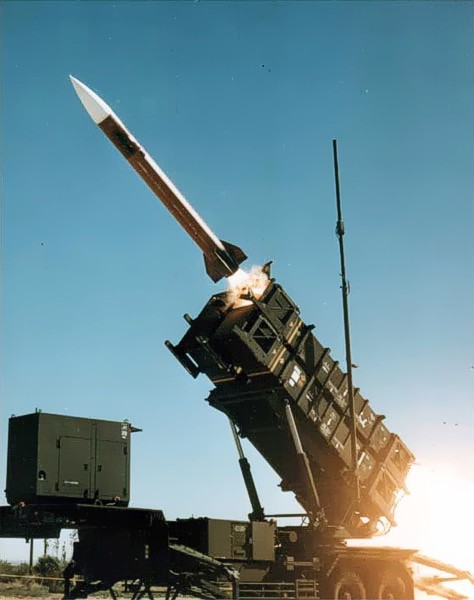
North Korea fired two short-range ballistic missiles toward the East Sea on Sunday, September 20, 2026, marking Pyongyang's 14th ballistic missile launch of the year and its first in eight days, South Korea's Joint Chiefs of Staff confirmed. The launches were the latest in a pattern of provocations by the Kim Jong Un regime tied to multinational military exercises in the region.
According to Seoul's Joint Chiefs, the first missile was launched from the Wonsan coastal area at approximately 3:00 p.m. local time, traveling an estimated 450 kilometers before splashing down in the East Sea. A second missile followed roughly three hours later, at around 5:50 p.m., flying more than 600 kilometers. Both were assessed as short-range ballistic missiles.
The launches appeared timed to protest ongoing multilateral maritime exercise Pacific Vanguard 2026, led by the U.S. Navy's 7th Fleet and involving Australia, Canada, Japan, New Zealand, and South Korea. The exercise, now in its eighth iteration, focuses on high-end maritime warfighting, anti-submarine warfare, and live-fire missile events across the Mariana Islands Range Complex.
In response to the launches, senior diplomatic officials from all three allies held urgent phone consultations the following morning. Baek Yong-jin, director general for Korean Peninsula policy at South Korea's Ministry of Foreign Affairs, spoke with David Wilezol, U.S. deputy assistant secretary of state for Korea and Japan, and Takashi Ariyoshi, a senior official at Japan's Ministry of Foreign Affairs. The three sides shared intelligence assessments and discussed coordinated responses.
South Korea's Foreign Ministry confirmed the three nations maintain a standing channel for promptly sharing information each time North Korea fires a ballistic missile — a protocol put in place after the series of record-setting launches in 2022. Sunday's launches triggered the channel immediately.
Sunday's launches are the 14th ballistic missile event of 2026 from North Korea. Pyongyang has escalated its tempo since threatening to bolster its nuclear deterrent capabilities just days earlier. Kim Jong Un has used joint US-South Korea-Japan military exercises as a recurring pretext for launches throughout his tenure, and analysts see Sunday's dual-launch pattern as deliberate signaling — demonstrating range variance between the two projectiles.
The trilateral consultation channel has become the fastest diplomatic mechanism Washington, Seoul, and Tokyo have for synchronized responses to North Korean provocations. Whether it produces any new deterrence posture beyond the existing one will depend on decisions made in coming days in all three capitals.