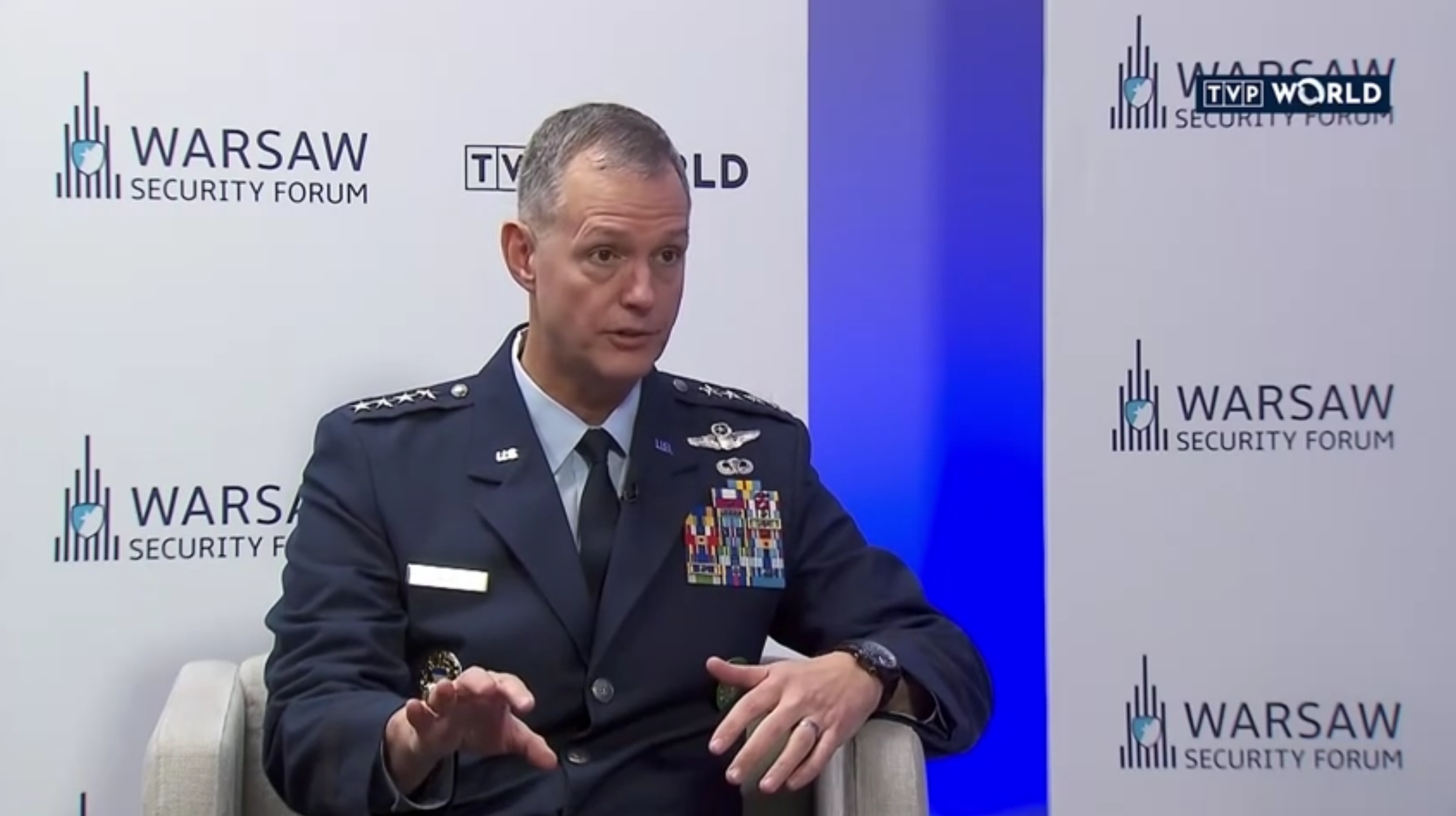









Historian Bradley Hart gave a groundbreaking, introductory talk at the National World War II Museum conference in New Orleans, November 21-22, 2025 on German Nazi Consul Baron Edgar von Spiegel (1937-41).
Why was it groundbreaking? Searching on youtube, it may be the first talk specifically focused on a Nazi German consul in the US, which raises key and uncomfortable questions, on why it took so long. When you dive into c. 1930s newspapers and other documentation focused on a consul, all of these American names, sometimes including company names, associated with the consul come forward.
Some American names are elite and familiar, and at least initially, it can be unclear why elites were interacting with a Nazi German consul. It can range from being a carryover from pre-Nazi regime times to being a pro-Nazi supporter, a business opportunist, or being complicit or rather clueless. They could even have been spies for US Naval Intelligence, including informal ones, etc.
It also can be the case that some Americans were victims dealing with Nazi German consulates and their spheres. At times, in addition to expat Germans, German-Americans were threatened. Threats at the time included blackmail, forced returns to Germany, German military service, and threats on assets and family members in Germany as well. One can only imagine especially how Jewish-Germans were treated.
To varying degrees the consuls were involved in spying, with agents, including some Americans.
There were news reports of traitors being beheaded in Germany, that taking American citizenship was traitorous, and even that taking US citizenship, or having taken it, wouldn't be acknowledged. Apart from the reality of this and the ins and outs, it was reported across the US in the 1930s.
Questions and concern about Americans and American companies appearing too close to the consuls and Nazi Germany were sometimes reported in 1930s and 1940s newspapers in detail.
Decades later on the business history front, historian Antony Sutton in 1976 mapped out complicit American companies making Stanford, he said, very uncomfortable. So, he left and published his book. But a lot of this basically fell out— and / or was pushed out— of public memory. There was a "forgive and forget" approach for some after WWII that needed that presumably, as well as Operation Paperclip (mentioned just two days ago even). And the decades rolled on.
But there are so many questions looking back.
On page 60 of the Department of State Bulletin on July 19, 1941, we see Baron von Spiegel, consul in New Orleans listed, after the closing of German and Italian consulates across the United States.
A number of consuls covering various regions have been mentioned in CDM network publication the Connecticut Centinal in articles this year: in this state department document, we see Boston, and
[c] Georg Gyssling in Los Angeles (in history until 2017, Gyssling was a despised Nazi; afterwards, documentation from his Nuremberg investigation was put forth that he was a double agent to US military, showing at times the depth of research, or lack of it);
[d] Hans Borchers in New York (and before 1933 in Cleveland); and
[e] former adjutant to Hitler, Fritz Wiedemann in San Francisco, the reported spy chief for the West Coast and into the interior, South America, and the Pacific. (Wiedemann's predecessor was Manfred von Killinger, the later "Butcher of Bucharest" that some Americans had to deal with).
There were other Nazi German consuls as well. You'll also see Chicago, Philadelphia, San Juan, St. Louis, and New Orleans. There were even honorary consuls in some other U. S. cities like Fritz Heiler in Detroit (Centinal again) in the presumed Cleveland district.
Overall, there were many key and clear touchpoints across America to the Nazi regime, including business and cultural organizations.
But the earlier mentions were just that— mentions, with a businessman or society person as the focus interacting with the consuls. Here, Hart focuses on the Nazi consul first.
Below, see Hart's 20-minute introductory talk followed by questions and answers.
+++
American victims of Nazi German consul activity, on American soil
In addition to Nazi consuls and bad actors, there were American victims in this history, including Hazel and Nancy Frome, brutally murdered east of El Paso, TX in 1938. They were travelling cross-country by car from the Bay Area with a stopover in El Paso, TX. It is thought that they may have unknowingly been transporting bulk intelligence in their car. Their murders are still unsolved and thought to be tied to Manfred von Killinger's Nazi German consul in San Francisco, the later "Butcher of Bucharest", and I'd argue, with a very possible New Orleans connection.
At the time, El Paso— between the San Francisco and New Orleans consul districts— was a key crossover point into Mexico for bulk espionage, even complete blueprints of factories, sent to South America and up and over to Germany. (Wolfgang Ebell of El Paso was, among others, in the big 1942 espionage ring trial). We see in a declassified overview put forth by Hart that Von Spiegel was indeed involved with some matters pertaining to Mexico. The New Orleans consul aspect and intelligence trail wasn't considered before in the Frome murders research.
A multi-country declassified intelligence dive may solve the Frome murders case after 87 years.
Adding to Hart's presentation and discussion, the reputed head of Gestapo in US, Herbert Scholz, mentioned at top, was sent to New Orleans temporarily after the Frome murders. Coincidentally, Von Spiegel was in hospital for a while in Florida after a car accident. This was reported as the cause in the press.

Scholz's wife Lelo was reported to be drunk on Nazism while in DC, and the Scholzes met earlier in Berlin via the Führer. Scholz's mother-in-law coincidentally was travelling to Mexico from Washington, DC at that time as well.
As an aside, Scholz's father-in-law Georg von Schnitzler was based in Germany and a director at the notorious I. G. Farben; that very powerful German chemical company had a number of important business tie-ups with American companies, including one in Baton Rouge. So, a string of coincidences here with a bit going on. (Click the link to see what Von Schnitzler was shockingly associated with, put forth at his Nuremburg trial.)
+++
Bradley Hart also wrote the book Hitler's American friends: The Third Reich's Supporters in the United States (2018). This is part of essential reading to understand aspects of the pro-Nazi vs. anti-Nazi battle in the United States with a lot of it not known in recent generations.
Let's hope for something comparable focused on the Nazi German consuls and their American spheres with deep dives into multi-country intelligence.
A number of German corporations have supported and provided access to their archives to independent historians, coming to terms with their Nazi-era histories. This is admirable. Sadly, many of their counterparts in the US, including institutions, are behind without full disclosure.
American victims like Hazel and Nancy Frome, and countless others, deserve justice, not "forgive and forget" for bad actors, and elite spin. The truth must come forward. The truth must be told. Examining German consul histories in depth is a critical component.
+++
Click to see documentation of the shocking propaganda trip of the British royal / Hitler ally across the US in March-April 1940, after the European war had already begun. There were events attracting hundreds of American elites in Chicago, Cleveland, Detroit, Los Angeles, New York, Santa Barbara, San Francisco, and Washington, DC. Documentation includes seized and also declassified intelligence, and a once-thought secret deposition from a court record in 1940. In LA and SB, it is thought that double agent German Consul to LA, Georg Gyssling, and those around legendary SoCal naval intelligence chief Ellis M. Zacharias, were involved.
+++
Also see:
-* Recent Report Based On Declassified Sources in 2000s Shows Nazi Spying In US Was More Effective Than Previously Thought (Armed Forces Press)
-* Info About US Bad Actors & Nazi Looted Art? A Call To Declassify The Nazi-era Naval Intelligence For The San Francisco District (1933-42): How You Can Help (Armed Forces Press)
-* Who Wanted To Become "The American Hitler" In c. 1934? A Curator At NY's Museum Of Modern Art, Today An Elite Left Bastion. See His Shocking Declassified FBI File (Armed Forces Press)
-* SUMMER READING: "Secret Missions: The Story Of An Intelligence Officer" By Captain Ellis Zacharias (1946) For Nazis In California, JP, And More (Armed Forces Press)
-* Podcast: Nazis In California: Emily Hall Tremaine Fights Back (YouTube)
-* Podcast: Nazis In California: Santa Barbara Museum Of Art Opening, 1941 (YouTube)
-* SHOCKER: Hitler’s Aristocrats (2023), The Museum Of Modern Art, New York, And The "NaziMoMA" Strand (Connecticut Centinal)
-* SUMMER READING: The Unsolved Mother-Daughter Double Murder, Nazis In Calif And Texas, 1938. Can You Solve The Case? (Armed Forces Press)
-* SHOCKING: Even Mt Vernon Staff Unfamiliar With Genocidal Nazi Duke's History & Tour Of America In Spring 1940; He's Listed As A "Famous" Visitor On Their Website! (Armed Forces Press)
-* SUMMER READING: "Hitler in Los Angeles" (2017) with Capt Zacharias, friends of Emily Hall Tremaine, and more. (RE: Coronado, 1935-41, Can YOU Crack The Case? (Armed Forces Press)