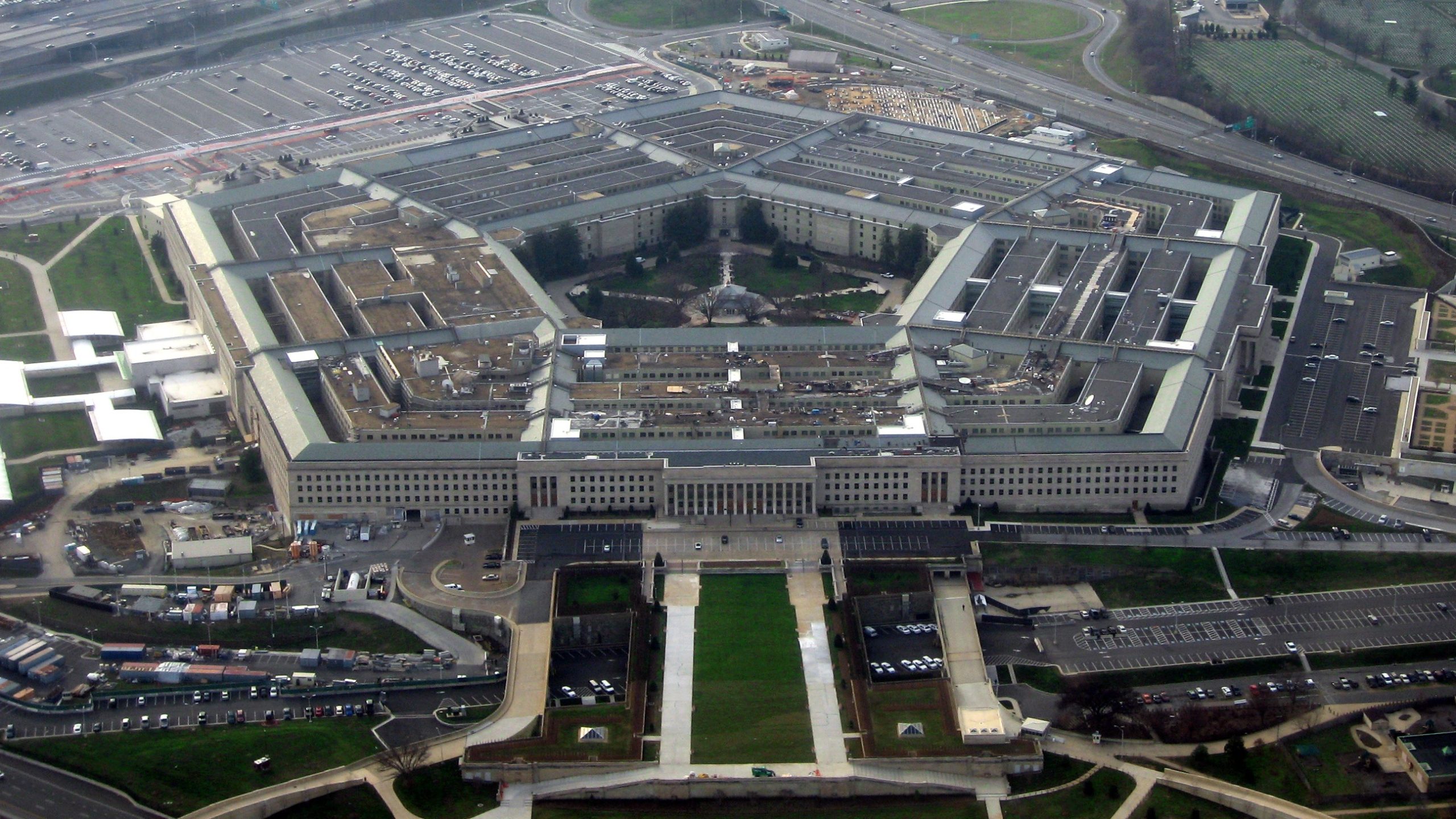








The latest Pentagon outrage is aimed at the smallest part of the story. In late August 2026, The Washington Post reported that conservative military veterans with large online followings had received civilian roles the department would not clearly describe, near Anthony Tata’s Personnel and Readiness shop. The names included retired Col. Rob Maness, retired Col. Kurt Schlichter, and retired Col. Thomas Anderson, known online as “Cynical Publius.” They say the work involved reviewing senior service colleges — curriculum, interviews with commandants and faculty — not running a messaging shop.
The Pentagon still has not published the documents that would settle it.
Fine. Ask those questions. But do not pretend this is when politics first entered the building. The better question is whether the military had already been politicized before a few outside veterans received government email accounts.
The issue is not whether influencers now orbit the Pentagon; it is why influence only becomes scandalous when it challenges the last decade’s abysmal record, personnel doctrine, and culture-war assumptions.
The real power is not who gets a Pentagon email address. It is who writes the rules governing who may serve, what counts as fit, what officers are taught, what commanders may question, and who gets retained or removed.
They are not under fire for the policy argument. They are under fire for the name. The charge attaches to the name so no one has to answer the policy. It is still not the same as using government machinery to rewrite accessions, medical rules, fitness scoring, or careers.
Where were the cries of institutional collapse when the previous administration used Pentagon authority to enforce the COVID-19 vaccine mandate? Secretary Lloyd Austin ordered it on August 24, 2021, and rescinded it on January 10, 2023, after Congress forced the issue. By then, more than 8,000 service members had been separated. Congress killed the order. The files stayed.
Personnel and Readiness is not a press shop. It is where the force gets built: accessions, medical disqualifiers, retention, fitness, and manpower. The press is covering email suffixes. The fire is still in P&R. A secretary can announce a policy in an afternoon. P&R determines how that policy becomes a force.
The current fight is being sold as a right-wing takeover. I do not see it that way. For more than a decade, DoD adopted policy over service objections, moved past uncomfortable task data, and treated professional dissent as a problem to be managed. The administration is using Personnel and Readiness to reverse it. These men were asked to look at the schoolhouse that trained the last generation of senior officers. That is not a coup. It is the job. Policy can flip in a week. The implementation layer does not.
That layer is made of career officials, instructions, medical manuals, accession standards, school curricula, legal reviews, evaluation systems, and administrative precedent. Presidents inherit it. Secretaries direct it. But neither replaces it overnight.
The Levers
The behemoth moves when presidents change, secretaries sign, instructions shift, schools teach doctrine, and test tables redefine “fit.” Posts do not open combat arms or build a diversity bureaucracy.
Every administration discovers the same truth: personnel policy is how politics becomes permanent. Rules of entry, service, standards, identity, and measurement all moved through the same lawful machinery. The current administration is now using that machinery, louder and in reverse.
The schoolhouse was already one of those levers. After 2020, officer education absorbed identity curriculum, climate modules, stand-down language, and representation tracking. When those modules went in, it was professional development. When retired colonels review war-college syllabi and interview commandants, it is called a secret takeover. That is the work Maness, Schlichter, and Anderson describe. There is still no public letter proving they were paid or tasked to post. If the charge is that they read syllabi and wrote findings, the charge is thin.
Not every social change landed the same way. When “Don’t Ask, Don’t Tell” ended, I did not see panic in the units I served in. Most soldiers cared whether the person next to them did the job. That is different from changing direct ground-combat entry, physical standards, deployability rules, medical policy, and training expectations.
Combat Arms
Direct ground combat remained restricted under the 1994 rule until Secretary Leon Panetta rescinded it in 2013. Secretary Ash Carter opened all occupations to women without exception in December 2015. The change opened roughly 237,000 positions DoD-wide.
The Marine Corps tested the premise in 2015 through the Ground Combat Element Integrated Task Force. The results were uncomfortable: all-male units outperformed mixed units on 93 of 134 tasks, and injury rates were reported at 40.5 percent for women and 18.8 percent for men. Gen. Joseph Dunford wanted some infantry positions kept closed. The policy went forward anyway.
The problem was not that policymakers disagreed with the data. The problem was that the data seemed to matter less than the destination.
A decade later, integration happened, but not the way the press releases sold it. By 2024, nearly 4,800 women served in Army infantry, armor, and artillery jobs; the Marine Corps had hundreds in previously closed ground jobs; and special operations numbers remained tiny. More than 150 women completed Ranger School. Both facts can be true: some women met elite standards, and the hardest ground-combat pipelines stayed overwhelmingly male.
That is where the lowered-standards argument starts. Not because every combat task was erased on paper, but because troops were told to believe in one standard while watching the institution preserve exceptions around it.
The Scorecard
The score sheet is where that argument becomes concrete. Occupational standards were supposed to be gender-neutral, but general fitness scoring remained age- and sex-normed. The Army Combat Fitness Test first pointed toward a harder measure, but early data showed men passing at much higher rates. The Army then adopted age- and gender-normed scoring, after which pass rates rose to about 98 percent for active-duty men and 95 percent for active-duty women.
That is where the standards argument lives. The Pentagon could deny lowering standards for women in combat roles while maintaining a general fitness system that treated sex as a scoring variable. Not every standard was lowered in every unit. The institution maintained two scoring tracks while continuing to describe military fitness through the language of common standards. Hegseth’s 2025 order to return combat-arms requirements to sex-neutral standards, and the later review of women in combat roles, only make sense because something had been divided.
Be honest about the record. Senior leaders have testified they saw no data proving units with women became unready. Do not claim a collapse the record does not prove. The argument does not require one. But “no collapse” does not make the 2015 Marine data meaningless, and high pass rates after sex-norming do not prove the load got easier.
The deeper problem was how questions were handled. Could commanders, NCOs, and combat veterans ask obvious questions without being branded as backward? Weak leaders could dress symbolic firsts up as progress, reward the outcome they wanted, and call pressure a standard only until the standard became inconvenient.
The Medical Exception
Transgender policy followed the same pattern. Carter opened service in 2016. President Trump restricted it from 2017 to 2019. President Biden restored open service in 2021. Trump reversed it again in 2025, treating gender dysphoria and sex-discordant identity as generally incompatible with readiness, deployability, uniformity, and military medical standards.
Keep the numbers in perspective. Pentagon officials estimated roughly 4,200 affected service members in 2025, a tiny fraction of the force, and treatment costs were small compared with the defense budget. That is not the hill to die on. The stronger question is consistency. The military treats chronic medical limits as readiness issues. Was gender dysphoria handled under that logic, or carved out because identity policy had become a parallel value system?
I sat through one transgender orientation class. We were told some service members could be on hormone treatment, unavailable for training or deployment, and that leaders had to be careful in how we spoke about those limits. I asked the readiness question: if a soldier is taking medication, unavailable for training, and not deployable for a period, how is that handled under the same standards we apply to everyone else? The answer was not about readiness. It was: “What are you afraid of, Sir?”
The narrower point is that the military cannot use one medical-readiness vocabulary for one group and a different moral vocabulary for another when deployability, time away from the line, and treatment requirements affect the mission.
The Compliance Layer
DEI added the institutional measuring system. After 2020, diversity language hardened into programs, offices, training, demographic tracking, promotion-package analysis, and academy disputes. DoD requested dedicated DEI and DEIA funding in the tens of millions before GAO said remaining primary DEI positions were reduced and eliminated.
The problem was not one briefing or slogan. It was a compliance layer inside the personnel system: officials, lawyers, trainers, and policy staff who decided which questions counted as bias and which counted as judgment. Judge advocates could turn command preference into a lawful-looking packet. These policies reached classrooms, formations, climate programs, legal reviews, and separation files.
Once a readiness question becomes a file, the behemoth no longer has to win the argument; it only has to manage the person asking it.
Critics of the reset are not neutral referees. They built the doctrine. They called it modernization. They only discovered “politicization” when they lost the levers.
That is the tell. They are not protecting the military from politics. They are protecting the politics they already pushed through the military.
The question matters because the force was not thriving while all of this was happening. Afghanistan ended in humiliation. Recruiting collapsed. The Navy struggled with maintenance and deployment cycles. Munitions stockpiles exposed the limits of the industrial base. Suicide remained a wound the institution could brief but not heal. None of those failures were caused by three retired colonels reading war-college syllabi. So if the old personnel doctrine did not make the force more ready, more lethal, more deployable, or more trusted by its own service members, what exactly was it for?
The Real Question
Do not confuse the people temporarily pulling the levers with the existence of the levers themselves. The consequential story is not who received a Pentagon email address in 2026. It is who decides who enters the force, who remains, what counts as medically and physically fit, what future generals are taught, what commanders may question, and which standards survive a change of administration.
Presidents change. Secretaries change. Influencers disappear.
The personnel system remains.