







Combined U.S. and Israeli air forces have established near-complete air superiority over Iranian airspace, as strikes continued into the sixth day of the renewed conflict that began Feb. 28, 2026.
The campaign follows the brief Twelve-Day War in June 2025, when Israel — later joined by limited U.S. support — targeted Iranian nuclear sites, missile facilities and air defenses. That earlier clash, which ended in a U.S.-brokered ceasefire on June 24, 2025, exposed significant vulnerabilities in Iran's integrated air defense network, including Russian- and Chinese-supplied systems.
In the current offensive, dubbed "Operation Epic Fury" by the U.S. and "Operation Lion's Roar" by Israel, allied aircraft have repeatedly overwhelmed Iranian defenses. U.S. Joint Chiefs Chairman Gen. Dan “Razin” Caine confirmed establishment of "local air superiority" early in the operation, enabling unimpeded flights over key areas including Tehran.
Israeli officials reported dismantling most air defense systems in western and central Iran within days, with strikes hitting radars, command centers and launch sites. Conventional fourth-generation fighters such as F-15s and F-16s, along with advanced F-35 stealth aircraft, have operated freely.
Iran's air force has mounted minimal resistance. No large-scale engagements involving its aging MiG-29s, F-4s or F-14s have been reported, raising questions about aircraft losses on the ground or pilot reluctance to engage. One documented air-to-air incident involved an Israeli F-35 downing an Iranian Yak-130 advance trainer on the conflict's third day.
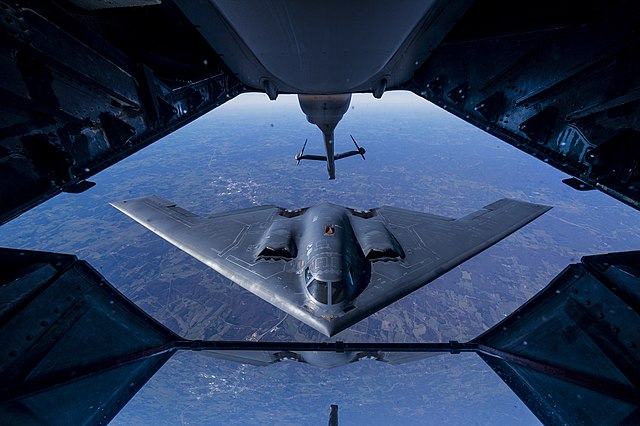
With air defenses largely neutralized, Iranian retaliatory options remain limited to ballistic missiles, cruise missiles and drones. U.S. and Israeli forces have prioritized hunting mobile launchers, destroying dozens in strikes that expose remaining sites upon firing. While no official reports detail how aerial tanker are being deployed, with air supremacy, the aerial tankers can be deployed closed to Iranian airspace, extending loiter time for fighters to suppress such threats more effectively.
Air power alone cannot topple the regime in Tehran, as our prolonged U.S. and Allied force operations in Afghanistan proved. Air supremacy grants freedom of maneuver, but regime change or internal collapse requires an uprising of Iranian civilians or perhaps the intervention of CIA armed Kurdish forces.
Iranian leaders continue to resist, launching sporadic missile barrages at Israel and U.S. bases in the Gulf. Casualties are limited on both sides, though reports indicate hundreds killed in Iran from strikes targeting military and leadership sites. Coalition forces have limited their strikes to military and regime targets, while Iranian attacks are indiscriminate, largely resulting in civilian casualties. Iranians attempted to widen the war by attacking across the region, but this only resulted in Arab and European nations joining the fight against Iran.
The offensive has increased pressure on Iran's 47-year-old Islamic Republic, amid popular uprisings and economic strain. U.S. President Donald Trump has urged Iranians to seize the moment for change, while Israeli Prime Minister Benjamin Netanyahu described the campaign as essential to neutralizing long-term threats. Should the Iranian regime fall, the Middle East will be changed dramatically. Without Iranian support, Hamas, Hezbollah, Houthis and Iraqi Shia would be left without a state sponsor.