







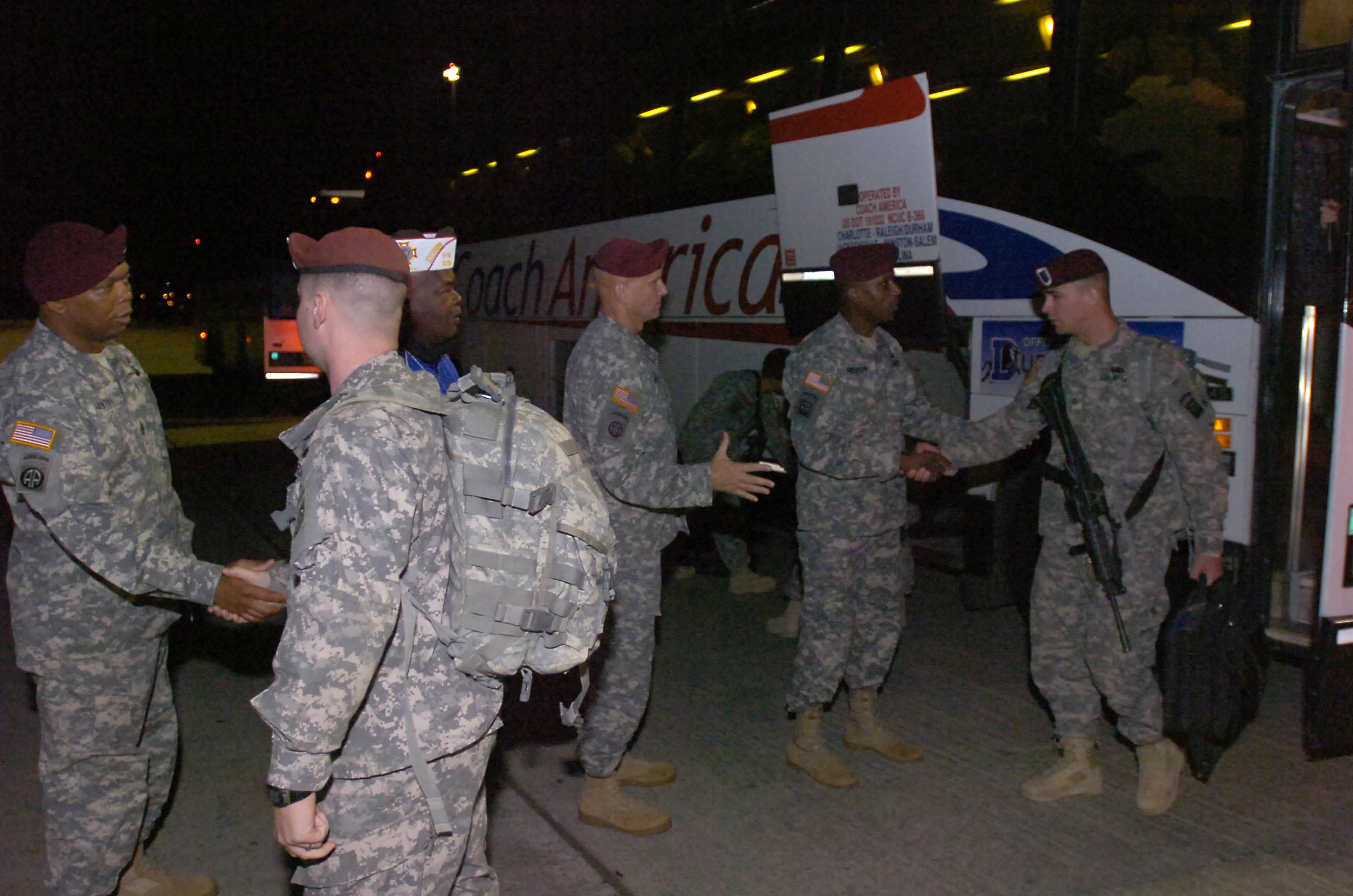
The withdrawal of the United States military from Iraq is set to be completed by September 30, 2026, bringing an end to a 23-year presence that began with the 2003 invasion. The sacrifice of the 4,500 Americans who died while serving in Iraq deserves an honest assessment rather than a political one.
Iran-aligned militias have declared the withdrawal a strategic victory. On the facts, that characterization is difficult to dispute. The Popular Mobilization Forces — Iranian-aligned paramilitary units — are now integrated into the Iraqi state security apparatus. Pro-Iranian political factions hold significant influence in the Iraqi parliament and government. Tehran’s strategic corridor connecting Iran to Lebanon through Iraq and Syria remains intact. The American military presence, which for two decades served as a check on Iranian expansion inside Iraq, is now gone.
Of the 18 Americans killed in this year’s conflict with Iran, seven died on Iraqi soil. The last was an Army sergeant killed in July during the controlled detonation of an Iranian-manufactured drone near Erbil — at a base the United States was already vacating. His death was not the result of a tactical failure. It was the consequence of a strategic situation in which American forces remained long after the conditions justifying their presence had deteriorated beyond recovery.
The Strategic Record
The original rationale for the 2003 invasion rested on two premises: that removing Saddam Hussein would eliminate a security threat, and that a stable, sovereign Iraq would emerge as a regional partner. Neither materialized in any durable form.
What did materialize was a protracted counterinsurgency campaign that consumed American military resources and political attention for nearly a decade, followed by a partial withdrawal, followed by a return engagement to defeat the Islamic State, followed by a secondary war of attrition conducted by Iranian proxies against the remaining American presence. Through each of these phases, Iran steadily expanded its influence — funding militias, cultivating political relationships, and building the institutional structures that would outlast any American military deployment.
This was not an accident of Iranian opportunism. It was a deliberate, sustained strategy executed over twenty years with remarkable consistency. Tehran’s approach was to avoid direct military confrontation with American forces while continuously raising the cost of the American presence through proxy action — attacks calibrated to inflict casualties and sustain political pressure without crossing thresholds that would compel a decisive American military response. The strategy proved effective precisely because it exploited the structural mismatch between Iran’s long-term regional ambitions and the short-term political cycles that govern American foreign policy commitments.
The Implications For Iran
Some voices in Washington have raised the possibility of ground military operations inside Iran as a means of resolving the current conflict. The Iraq experience does not support the feasibility of that approach, and it is worth examining why in specific terms.
Iran presents a fundamentally different operational environment than Iraq. Its territory is approximately four times larger. Its population of roughly ninety million is nearly three times Iraq’s. Its military establishment — the regular armed forces, the Islamic Revolutionary Guard Corps, and the Basij mobilization network — has spent four decades preparing for precisely the scenario of a US-led ground campaign. The IRGC in particular was designed as an asymmetric warfare force capable of sustained operations against a technologically superior conventional opponent.
The terrain compounds these challenges significantly. The Zagros Mountain range forms a natural defensive barrier along Iran’s western approaches. The central plateau offers limited cover and enormous logistical distances. The major population centers — Tehran, Isfahan, Mashhad, Tabriz — represent urban environments where conventional military advantages diminish and the costs of sustained combat operations escalate rapidly.
The political dimension is equally significant. In Iraq, Iran operated as an external sponsor of proxy forces. Inside Iran, any ground campaign would be conducted against a population defending its own country on its own soil. The historical record of counterinsurgency operations against home-territory defenders is not favorable to the occupying force, regardless of conventional military superiority. The will to resist does not deplete on the same timeline as material resources.
There is also the question of Iran’s regional network. Tehran has invested decades building relationships with armed non-state actors across Yemen, Lebanon, Syria, and Iraq. A ground campaign inside Iran would not occur in isolation — it would activate those networks against American forces, American partners, and the commercial shipping lanes that underpin global energy markets. The second and third-order consequences would extend well beyond Iran’s borders.
What The Record Suggests
Operation Epic Fury demonstrated that American military and economic power, applied through air superiority, naval operations, and financial pressure, can impose serious costs on Iran without the liabilities that accompany ground occupation. That approach has limitations — but they are of a fundamentally different and more manageable order than those involved in sustained ground operations in a country of Iran’s size, terrain, and population.
The withdrawal from Iraq does not represent a failure of American military capability. It represents the conclusion of a commitment extended beyond the point at which its strategic rationale remained viable. The question for American policymakers is whether the lessons of that experience — about the limits of ground occupation as a tool of strategic transformation, about the durability of adversary proxy strategies, about the mismatch between long-term regional competition and short-term political cycles — will inform the decisions that follow.
The men and women who served in Iraq, including the 4,500 who did not return, deserve an honest accounting of what their service produced and what it failed to produce. That accounting is the foundation of sound strategy going forward.
Source: Reuters