







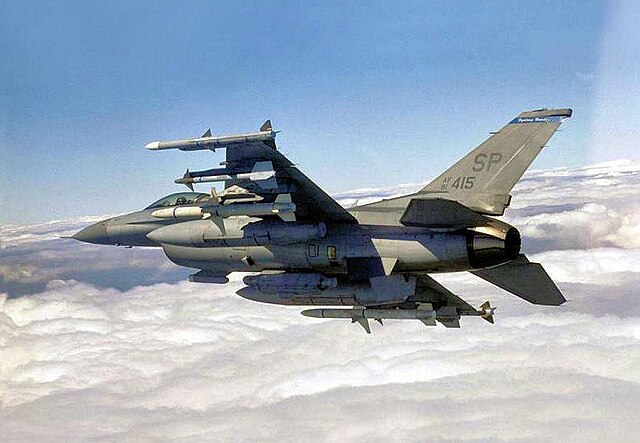
Washington, D.C. – In the dark skies above Yemen on March 27, 2025, two U.S. Air Force F-16 pilots came within seconds of catastrophe when Houthi rebels launched a deadly surface-to-air missile ambush. Lt. Col. William “Skate” Parks and Maj. Michael “Danger” Blea, flying “Wild Weasel” jets specialized in suppressing enemy air defenses, survived a harrowing 15-minute ordeal that earned them the Silver Star—the military’s third-highest valor award.
The 'Wild Weasel' capability was honed during the Vietnam conflict against Russian-supplied weapons to the North Vietnamese.
The mission was part of Operation Rough Rider, a 52-day U.S. air campaign launched March 15, 2025, to degrade the Iran-backed Houthis' ability to attack international shipping in the Red Sea and Gulf of Aden. The operation, one of the most intense U.S. military efforts in the region in recent years, involved over 1,000 strikes on Houthi targets, including missile sites, radar systems, and leadership. It ended May 6, 2025, with a ceasefire under which the Houthis ceased attacks on U.S. vessels but continued targeting Israeli-linked shipping, reported Air And Space Forces Magazine.
Parks and Blea, from the 480th Expeditionary Fighter Squadron (“Warhawks”) based at Spangdahlem Air Base, Germany, deployed to the Middle East from October 2024 to July 2025. Their unit specialized in SEAD (Suppression of Enemy Air Defenses) missions, carrying AGM-88 HARM missiles to target enemy radars and APKWS rockets for drone threats.
On that night, the pilots led a four-ship F-16 formation supporting a larger strike package, including B-2 Spirit stealth bombers from Diego Garcia that hit Houthi ballistic missile facilities near Sanaa. The F-16s penetrated Yemeni airspace over the Red Sea, fired HARMs to suppress defenses, and drew attention away from the bombers—living up to the Wild Weasel motto, “First In, Last Out.”
After the main strike succeeded and defenses appeared quiet, the pilots exited toward safety. But the Houthis had feigned silence, using passive visual, electro-optical, and infrared sensors to track the jets without activating radars. Suddenly, missiles launched in a classic “SAMbush.”
Parks spotted a flash and turned hard into the first incoming missile, which streaked past close enough under his left wing for him to hear its rumble. “It’s something that’s stuck with me to this day,” he later told Air & Space Forces Magazine.
Blea faced an even closer call. “It was flying within feet of the front of my nose,” he recalled—about 30 feet, less than the F-16’s length. Over the next 15 minutes, the pair evaded six missiles total through high-G maneuvers and countermeasures, burning fuel rapidly on afterburner.
Fuel became a life-or-death issue. Low on reserves and risking ejection over hostile territory or the Red Sea, they relied on emergency tanker support. A KC-135 crew moved into harm’s way for refueling—Blea first—averting disaster. The tanker pilots and boom operator earned Distinguished Flying Crosses.
The emotional reunion at base was profound. As Blea parked, dozens of maintainers cheered. A friend climbed the ladder: “Dude, you’re home!” Parks and Blea shared a silent moment of relief and pride. “We both made it,” Blea said.
Parks, squadron commander leading 56 Airmen and 12 F-16s, received his Silver Star from Air Force Chief of Staff Gen. Ken Wilsbach at the Pentagon on November 26, 2025. He also earned a Bronze Star for overall leadership. The 480th achieved 108 drone and cruise missile kills, dropped over 134 bombs, fired 47 HARMs, and flew 9,000 hours amid 22 SAM engagements.
Operation Rough Rider’s command structure drew controversy: U.S. Central Command shifted air control to Joint Special Operations Command, prioritizing leader targeting over broader air defense suppression, according to critics. Assessments vary—tactical successes in reducing Houthi missile and drone threats, but debates persist on strategic impact, civilian casualties, and costs exceeding $1 billion.
This marked what sources describe as likely the first instance of a large-scale Middle East air campaign—encompassing over 1,000 strikes on Houthi missile sites, air defenses, command nodes, and leadership—being directed by JSOC rather than conventional airpower headquarters. JSOC, a component of U.S. Special Operations Command (SOCOM), typically oversees elite units like Delta Force, SEAL Team 6, and special mission units focused on counterterrorism, high-value target raids, and direct action against militant networks.
The decision stemmed from the Trump administration's aggressive push to "restore freedom of navigation" in the Red Sea and "re-establish deterrence" against Houthi attacks on shipping, which were tied to the Israel-Hamas conflict. Kurilla, drawing parallels to Israel's operations against Hezbollah, advocated for a strategy emphasizing targeted strikes on leadership and key enablers to degrade the group rapidly. JSOC's expertise in dismantling terrorist organizations—honed over decades in Iraq, Afghanistan, and against ISIS—made it a logical choice for proponents who viewed the Houthis as a networked militant force backed by Iran rather than a conventional state adversary.